Creating Product Descriptions with AI: E-commerce Guide

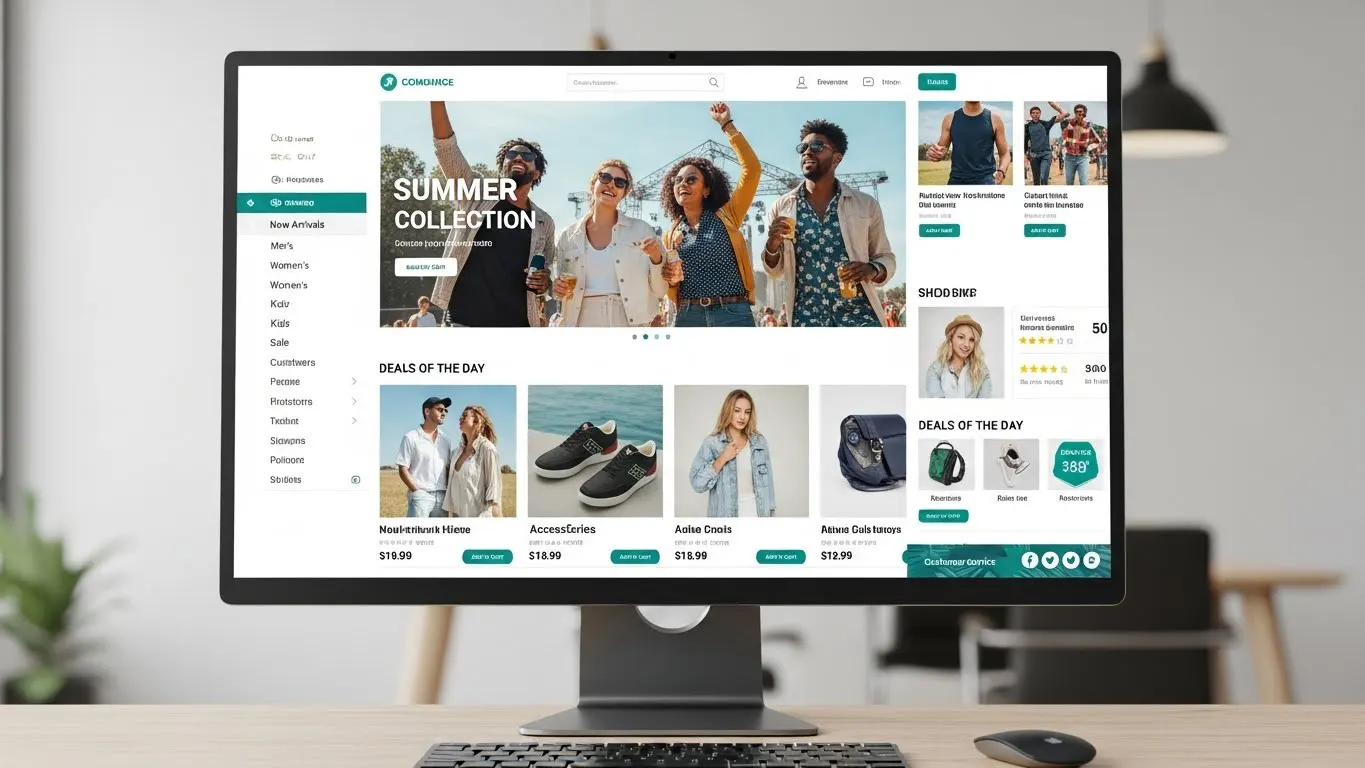
AI product description generators use machine learning algorithms to automatically create compelling, SEO-optimized product copy that converts browsers into buyers while saving e-commerce businesses a massive content creation time.
Introduction
Some of you might know the feeling that writing product descriptions can be soul-crushing if you run an e-commerce business! When you’re running a small online store with hundreds (or thousands) of SKUs, then creating unique and compelling copy for every single product feels impossible. That’s exactly why I prepared this guide to help you use AI product description generators, to avoid those nightmares!
Here’s something that caught my attention. According to Shopify, the market for AI-powered ecommerce tools is predicted to reach around $17 billion by 2030. That’s not just a fantasy; that’s validation that this technology actually works for businesses like yours.
Whether you’re launching your first Shopify store or managing an established e-commerce brand, AI-powered product description tools can dramatically cut your content creation time while improving conversion rates.
In this guide, I’m sharing everything I’ve learned about using AI to write product descriptions that actually sell, including the best tools available, practical tips, and mistakes to avoid. Let’s do this!
What Is an AI Product Description Generator?
Okay, so here’s the thing about AI product description generators. They’re basically smart writing assistants that use natural language processing (NLP) and machine learning to crank out product copy for you. Personally, when I first heard about them a while back, I didn’t take it seriously. Like, how could software actually write something that didn’t sound robotic, right?
But the technology behind these tools is actually pretty fascinating. They’re trained on massive amounts of text data. We’re talking millions of product descriptions, blog posts, and other content. So when you feed them information about your product (the name, features, who it’s for, what tone you want, etc), they analyze all that and generate copy that’s supposed to match your brand voice. It’s not magic, but it’s darn good sometimes!
The difference between a good AI generator and those old template-based tools is huge. I remember using some fill-in-the-blank template software years ago for a client’s online store, and it was painful. Everything sounded exactly the same. Imagine reading something like, “This PRODUCT is perfect for THOSE because it offers SOMETHING!” Just… boring!
Modern AI tools are way more sophisticated. They understand context, they can adapt tone, and they actually create unique variations instead of just spitting out words! You’ll give them inputs like your product name, key features, target audience, and the vibe you’re going for (professional, playful, luxurious, whatever), and they’ll generate something that’s actually usable.
Now, here’s where people get confused. These AI generators aren’t replacing human copywriters entirely, and that’s not really the goal. Think of it more like AI content creation for beginners who need to get hundreds of products online quickly. A human copywriter is still going to beat AI when you need deeply emotional storytelling or super niche industry knowledge. But for standard e-commerce descriptions? AI can handle the heavy lifting while you focus on editing and adding that personal touch.
I use AI for initial drafts now, then I go in and tweak things. It’s honestly changed how fast I can move with my clients’ products (which I barely get involved, to be honest), or when I’m consulting with other small business owners.
Key Benefits of Using AI for Product Descriptions
Let me tell you about the moment I actually “got” why AI product description generators were a HUGE help. I had a client who sold handmade home decor items (around 300 products in their Shopify store). They’d been writing descriptions one by one, and it was taking forever. We’re talking about 20-30 minutes per product when you include research, writing, editing, and formatting. And this is where things get really interesting.
The time saving alone is beyond value. What used to take hours now takes minutes. I’m not exaggerating. I can generate 50 product descriptions in the time it used to take to write 3 or 4 manually. For small business owners who are already wearing seventeen different hats, that’s impressive. You’re not spending your entire weekend writing copy when you could be, you know, actually running your business or spending more quality time with your family.
But here’s what surprised me even more than the speed, and that’s consistency. When you’re writing descriptions manually, especially over weeks or months, your tone shifts. Maybe you’re more energetic on Monday morning than Friday afternoon. Maybe you just forgot exactly how you described a similar product last month. AI doesn’t have that problem. Once you set your brand voice parameters, it maintains that same tone across every single product.
The SEO optimization is another benefit I didn’t fully appreciate at first. Good AI tools automatically weave in relevant keywords without making it sound stuffed or weird. They’ll optimize your meta descriptions, use search-friendly formatting, and structure your content in ways that Google actually likes. I’ve seen products start ranking better just because the descriptions were more SEO-friendly after using AI. And if you’re new to AI SEO content writing, this is honestly one of the easiest places to start seeing results.
Another useful feature for some businesses is multilingual capabilities. I have a friend who runs a Shopify store and wanted to expand into European markets. Translating 200+ product descriptions would’ve cost thousands through a translation service. With AI? You can generate versions in Spanish, French, German, whatever you need, in basically the same amount of time it takes to generate the English version. And of course, the quality isn’t always perfect (you still want a native speaker to review), but it’s like 80-90% of the way there.
Now, let’s talk money for a second. Hiring a professional copywriter might cost anywhere from a modest amount per description to much more for specialized products. If you’ve got hundreds of products, that adds up fast. Most AI tools work on subscription models or pay-as-you-go, and you’re looking at significantly lower costs overall. The ROI is pretty clear, especially if you’re just starting out or scaling up quickly.
And here’s something I love that most people don’t think about! A/B testing becomes so much easier. Want to test whether a description converts better than another one? Well, generate both versions in two minutes and split test them. Before AI, creating multiple variations was tedious enough that most people just… didn’t do it. Now there’s no excuse!
Best AI Product Description Generators for E-commerce (2026)
Alright, so you’re probably wondering which tools actually work. I’ve tested a bunch of these over the past couple years, and I have some thoughts.
Copy.ai is one I use regularly for a lot of things, including quick product descriptions. It’s got specific templates for e-commerce, and the bulk generation feature is solid. You can pump out dozens of descriptions at once, which is perfect when you’re launching a new product line. They’ve got a freemium option that lets you test it out, which is nice if you’re on a tight budget. And you can integrate it with Shopify or WooCommerce (and more), which is really convenient.
Jasper (used to be called Jarvis) is what I recommend to clients who have bigger budgets and need more advanced features. It’s pricier, but the quality is noticeably better for longer-form content, and the brand voice memory is impressive. Once you train it on your style, it really does maintain consistency. I’ve tested it for months, and I’d recommend it to anyone who needs their content to sound really polished.
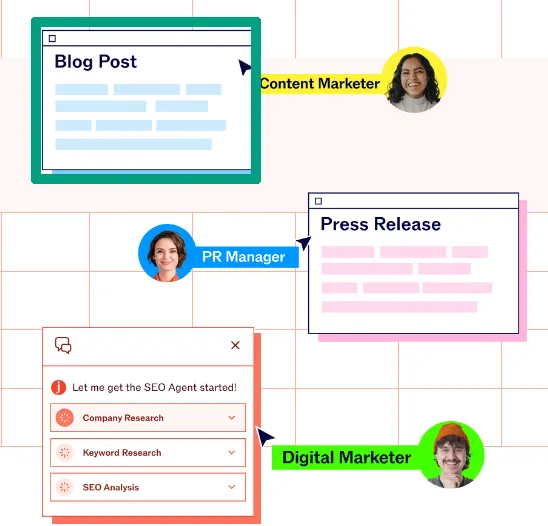
Writesonic is the one my colleague uses all the time. She runs an electronics store with like 500+ products, and she says the technical product description templates are specifically good for specs-heavy items. They also have multilingual support built in, which is amazing if she decides on her international expansion. The pricing is reasonable too, somewhere in the middle range.
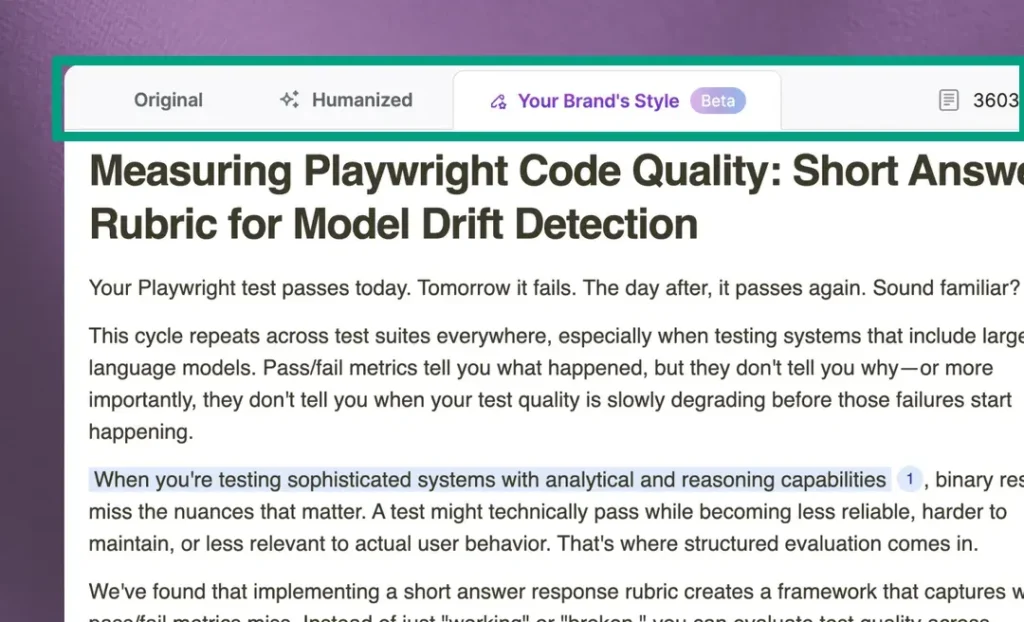
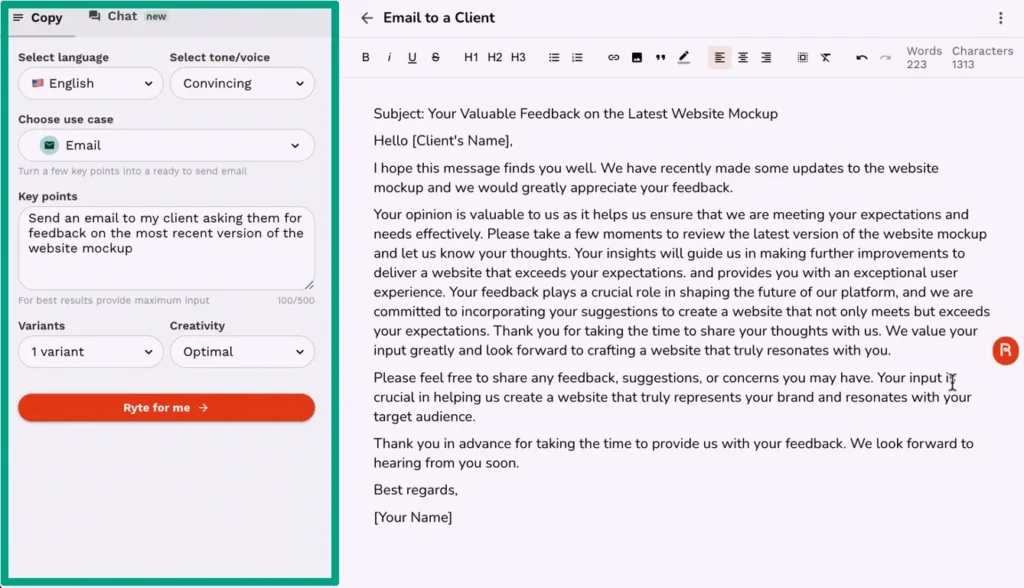
For folks just starting out, Rytr is probably one of the best free AI content tools I’ve come across. The free tier is actually usable (not just a tease), and you can generate a decent number of descriptions per month without paying anything. The quality isn’t quite as high as the premium tools, but honestly? For basic product descriptions, it gets the job done.
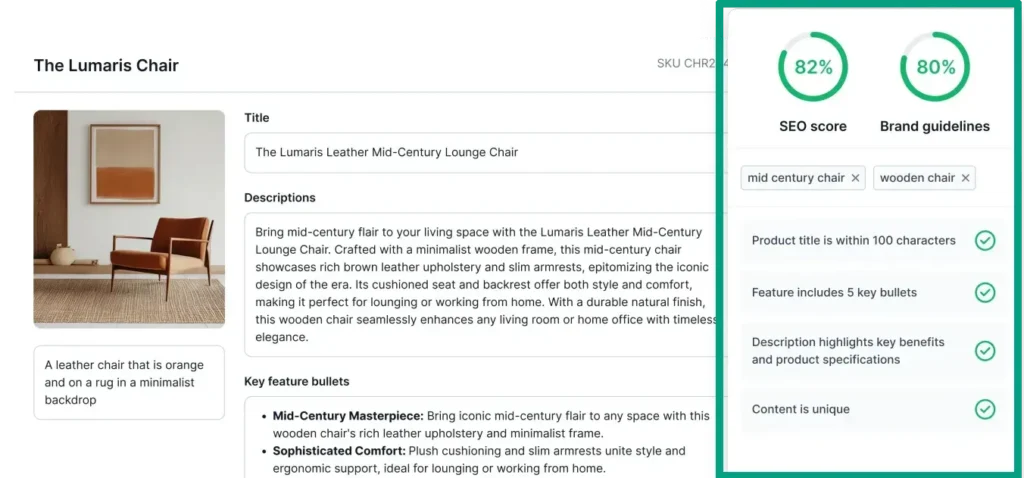
Hypotenuse AI is interesting because it’s specifically designed for e-commerce. They’ve got features for generating descriptions directly from product images, which is wild. You upload a photo of your product, and it’ll create copy based on what it “sees.” I just tested this recently to see what’s what, and while it’s not perfect, it’s pretty impressive for getting started quickly.
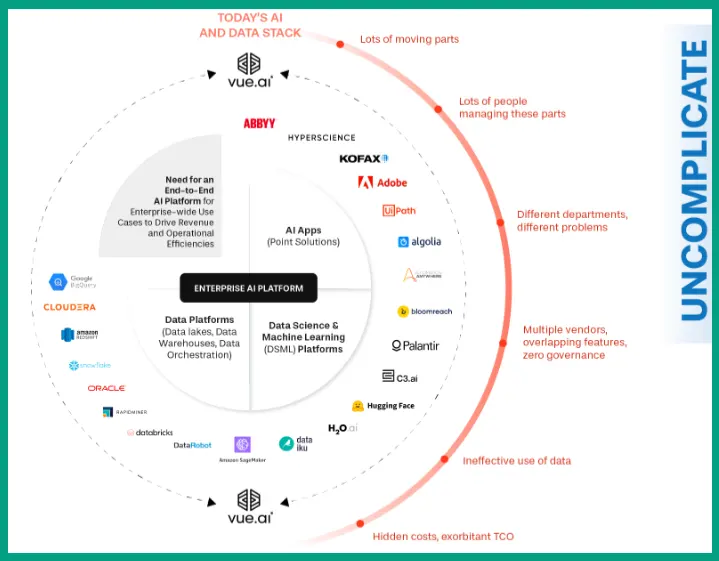
If you’re in a niche like fashion, Vue.ai has specialized tools that understand style terminology and seasonal trends. A bit niche, but if that’s your industry, worth checking out. And for home goods, I’ve seen people have success with Copysmith, which has templates that work well for furniture and decor descriptions.
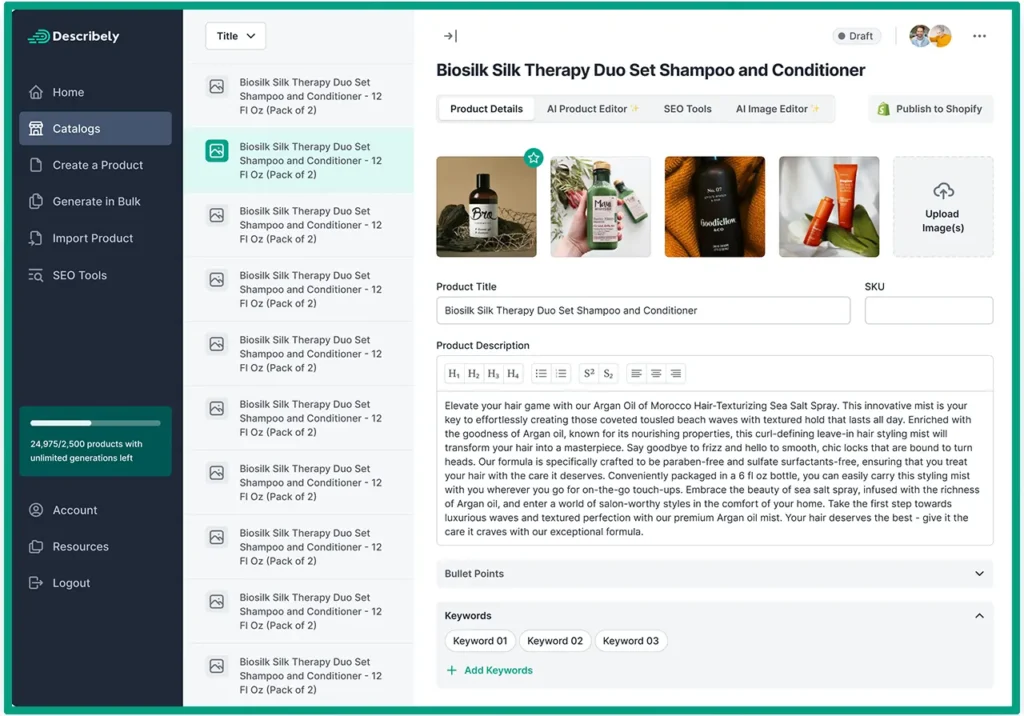
The main thing to remember is, most of these are among the best AI writing tools available right now, but they all have learning curves. Plan to spend a few hours figuring out how to get the best results from whichever one you choose. Start with free trials, test them with your actual products, and see which interface makes sense to you.
How to Write Effective Product Descriptions with AI Tools
Okay, this is where the rubber meets the road! Having an AI tool is one thing; actually using it well is another. Let me walk you through how I do this, because I’ve definitely made mistakes along the way.
Step 1: Gather your product information first. And I mean, really gather it! Don’t just jump into the AI tool with a product name and hope for the best. You need specifications, dimensions, materials, key benefits, what problem it solves, who your target customer is, and what makes it different from competitors. Write all this down before you touch the AI tool.
You can create a simple document with bullet points for each product. Takes an extra maybe 10 minutes upfront, but saves so much time later. The AI can only work with what you give it. So remember, garbage in, garbage out!
Step 2: Define your tone and style clearly. Most AI tools let you set parameters like “professional, casual, luxury, playful,” etc. But here’s what I learned. You need to be specific. Don’t just say “casual.” Say “casual and friendly, like talking to a neighbor, use contractions, keep sentences short.” The more specific you are about your brand voice, the better the output.
I actually keep a little brand voice guide that I reference whenever I’m setting up a new AI project. It’s just a few sentences describing how I talk, with example words I use a lot, and words I avoid. Sounds nerdy, but it works!
Step 3: Input strategic keywords without being weird about it! This is where SEO comes in. You want to include your target keywords (like “stainless steel water bottle” or “organic cotton t-shirt”), but you don’t want to stuff them in there awkwardly. You can use a list of 2-4 main keywords you want to include, and let the AI figure out how to incorporate them naturally. Most good tools are smart enough to do this without making it sound spammy.
The mistake I see people make is trying to force too many keywords. Your product description still needs to read like it’s written for humans, not for Google’s algorithm.
Step 4: Generate multiple variations and pick the best. Never settle for the first output. I always generate at least 3-5 versions of each description. Sometimes the third one is way better than the first. Sometimes I’ll take the intro from version one, the feature list from version two, and the closing from version four. Mix and match. This is where AI really shines, so you can treat it like a brainstorming partner.
Step 5: Edit and personalize; this is important. I cannot stress this enough. You still need to edit. AI gets you most of the way there, but that last step is what makes the description actually usable. I add personality, smooth out any awkward phrasing, make sure it matches my exact brand voice, and add any specific details the AI might have missed.
For example, an AI might write, “This water bottle keeps drinks cold for 24 hours.” Fine, but boring! I’ll edit it to something like, “Seriously, your morning iced coffee will still have ice cubes at dinner. We’ve tested it.” See the difference? That’s the human touch.
Step 6: Optimize for conversions. This is where you think about buyer psychology. Add social proof if you have it (like those five-star reviews). Include emotional triggers (ex, imagine never losing your keys again). Make sure your call-to-action is clear (ex, add to cart and enjoy free shipping today). AI can suggest these elements, but you need to make sure they’re actually there and working together.
Let me show you what this looks like in practice. Here’s an AI-generated description straight out of the tool:
“Premium yoga mat made from eco-friendly materials. Features a non-slip surface and extra cushioning. Measures 72 inches long. Available in multiple colors. Perfect for yoga, Pilates, and stretching exercises.”
It’s fine and accurate, but totally bland! Here’s that same description after I edited it:
“This isn’t just another yoga mat. It’s the one you’ll actually want to unroll every morning. Made from eco-friendly materials (because the planet matters), with a non-slip surface that keeps you stable through every warrior pose and enough cushioning that your knees will thank you. At 72 inches, it’s long enough for tall folks, and it comes in colors that’ll make your home studio feel like an actual retreat. Whether you’re deep into your yoga practice or just starting to figure out what downward dog means, this mat’s got your back. And your knees. And your wrists.”
See how much more engaging that is? The AI gave me the foundation, the facts, the structure. I added the personality and persuasion. Though I didn’t have to make it this long, but I just wanted to show you how far it can go.
One last thing. Test your descriptions. Look at your conversion rates, see which products are performing well, and figure out what’s working in those descriptions. Then apply those lessons to your other products. AI makes it easy to iterate and improve over time, so take advantage of that.
FAQ
Q: Can AI product description generators replace human copywriters entirely?
A: No, AI generators work best as productivity tools rather than complete replacements. While AI excels at creating structured, SEO-optimized content quickly, humans add brand personality, emotions, and accuracy. The ideal approach combines AI efficiency with human creativity and strategic editing.
Q: Will using AI-generated product descriptions hurt my SEO rankings?
A: Not if used correctly. Search engines evaluate content quality, not creation method. AI-generated descriptions that are edited, unique, and provide value to users perform well in search results. The key is avoiding duplicate content and ensuring descriptions genuinely help customers make purchasing decisions.
Q: Can AI tools generate product descriptions in multiple languages?
A: Yes, most advanced AI product description generators support multilingual content creation. This feature helps e-commerce businesses expand internationally without hiring multiple copywriters. However, always have native speakers review translations to ensure accuracy.
Q: How long should AI-generated product descriptions be?
A: Optimal length depends on product complexity and platform. For most e-commerce products, aim for 150-300 words covering key features, benefits, and specifications. Simple items may need only 50-100 words, while technical or luxury products benefit from 300-500 words. Focus on value over word count.
Conclusion
AI product description generators transformed many e-commerce businesses with the process of content creation. Instead of spending hours stressing about every product page, they can now generate quality descriptions in minutes and focus their energy on strategy, customer service, and growing the business.
Just remember, these tools aren’t about replacing human creativity; they’re about amplifying it. Use AI to handle the heavy lifting of initial drafts, then add your unique brand voice, customer insights, and personality that makes your store stand out. Start with one of the tools I mentioned, experiment with different prompts and tones, and always edit before publishing.
A successful e-commerce is about connecting with customers and solving their problems. AI product description generators give you more time to do exactly that. Whether you’re managing 50 products or 5,000, this technology levels the playing field and helps small business owners compete with major retailers.
Ready to transform your product pages? Pick an AI tool that fits your budget, start with a small batch of products, and see the difference for yourself!