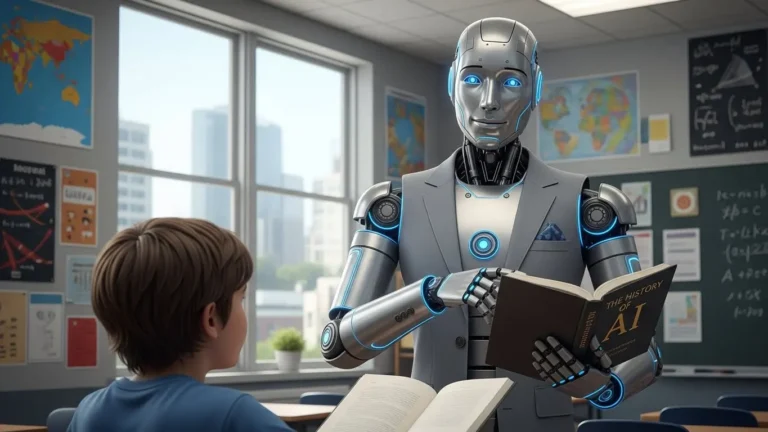
Ethical Use of AI in Education: Guidelines for Students and Educators


AI ethics in education means using artificial intelligence tools responsibly, honestly, and fairly while protecting student privacy and building critical thinking skills that help everyone succeed.
Introduction
Let’s start with the fact that AI just hit education like a freight train, and it seems nobody handed out a manual! As someone who helps small business owners figure out tech stuff, I see the same pattern everywhere. Every day a new tool drops, everyone jumps in, and then we all scramble to figure out how to use it the right way!
And the numbers are wild. According to the Higher Education Policy Institute‘s 2025 Student Generative AI Survey, 92% of students now use AI tools in some form. That’s up from just 66% in 2024! So yeah, AI ethics in education isn’t some future problem anymore. It’s happening right now in classrooms, dorm rooms, and staff meetings.
Look, I get it. Teachers are trying to grade papers while students are asking ChatGPT to explain calculus at 2 AM. Parents are worried their kids will stop thinking for themselves. Plus, nobody really knows where the line is between getting help and cheating! That’s the real dilemma we’re about to discuss when it comes to ethics in education using AI.
So let’s talk about building guidelines that actually work. Real stuff you can use tomorrow, not some fancy framework that sits in a PDF nobody reads!
Why AI Ethics Matter More Than You Think
Look, I’ve been working with small business owners and educators for years now, and I can tell you this. AI ethics in education isn’t some abstract concept we can deal with later. It’s happening right now, whether we’re ready or not.
The problem is pretty straightforward. AI tools are getting smarter at lightning speed, and schools are basically scrambling to figure out the rules. I had a client who runs a tutoring business, and she told me about a student who used AI to write an entire essay without realizing it was considered cheating! The kid genuinely thought it was okay because nobody had explained the boundaries. That’s the mess we’re dealing with.
And to be honest, it’s not just about catching students doing something wrong. When kids don’t understand where the line is, they accidentally hurt themselves. They miss out on actually learning stuff because AI did the heavy lifting. They develop these weird skill gaps that show up later when they’re expected to, you know, like actually think for themselves.

Teachers are struggling too, and I feel for them. A friend of mine who teaches in high school said grading has become this anxiety-guessing game! She can’t always tell what’s student work and what’s AI-generated, so she’s had to completely rethink how she assesses those assignments. The trust between teachers and students gets shaky real fast when everyone’s second-guessing everything!
Here’s what really matters though. We’re not just preparing kids for tests anymore. We’re preparing them for workplaces where AI is everywhere. They need to know how to use AI for studying and work without losing their ability to think critically. It’s a balancing act, and getting it wrong means we’re sending graduates into the world who can’t function without a chatbot holding their hand!
The simple truth is, AI ethics in education isn’t about being a strict person and saying “no” to everything! It’s about building good habits early, when it actually sticks. Students who learn to use AI responsibly now will have a massive advantage over those who either avoid it completely or use it to skip the actual work entirely!
Your school’s future literally depends on getting this right now. Wait too long, and you’re playing catch-up while dealing with a mess of academic dishonesty cases, parent complaints, and students who haven’t actually learned anything! Trust me on this one.
Privacy and Data Protection in AI Tools
Okay, so here’s something that kept me up at night when I first started looking into AI tools for education. The amount of student data these platforms collect is wild! Like, way more than you’d think.
I tested out a bunch of the best AI education apps for a client, and the data collection was pretty scary once you actually read those privacy terms nobody reads! We’re talking about everything from what students type into the AI to how long they spend on each question, their writing patterns, and maybe even their location data. Some apps track every single interaction.
But here’s the sketchy part. A lot of these AI companies are super vague about what they do with that information! They might store it on servers in other countries. They might use it to train their AI models. Some even share data with third parties for marketing purposes. I’ve seen terms of service agreements that basically say, “we own everything you create with our tool!” That’s a HUGE problem.
So, it’s your job to ensure that before you let students use any AI tool, you need to ask some basic questions. Like, where is the data stored? Who has access to it? How long do they keep it? Can students or parents request deletion? Does the company comply with FERPA (The Family Educational Rights and Privacy Act) and COPPA (Children’s Online Privacy Protection Act) regulations? If you can’t get clear answers, that’s a red flag!
You can also show your students how to actually read a terms of service agreement. Yeah, they’re boring and long, but students need to spot the sketchy stuff. Look for phrases like “we may share your data with partners” or “by using this service, you grant us rights to your content.” Once students see it themselves, they get way more careful about what they’re willing to share.
For educators, there are some practical steps that help. Set up accounts yourself instead of having students create their own. Use school email addresses instead of personal ones when possible. Turn off any data collection features you don’t actually need. Some AI tools have “privacy mode” or “education mode” settings that limit tracking.
And look, parents are going to have concerns, and they should. So, be honest with them. Tell them what data gets collected and why you think the educational benefit is worth it. Give them opt-out options if possible. I’ve found that transparency goes a long way. Parents don’t expect you to be a tech expert, but they do expect you to care about protecting their kids’ information.
Academic Integrity Guidelines That Actually Work
This is where things get messy, because the line between getting help and cheating with AI isn’t always obvious anymore!
The big question everyone’s asking is, when is AI a helper vs when is it doing the work for students? I’ve wrestled with this in my own business when helping clients figure out policies. The way I explain it is pretty simple. If AI is like a tutor who explains concepts, that’s probably fine. But if AI is like someone taking the test for you, that’s not!
Creating boundaries students actually understand takes real examples, not vague warnings. So here’s what I understand well about AI that teachers need to distinguish. Brainstorming ideas with AI? Totally okay. Asking AI to explain a concept you’re stuck on? That works. Getting AI to break down a problem? Sure. But copy-pasting AI output and calling it your own work? Nope! Or having AI write your entire essay? Definitely not!
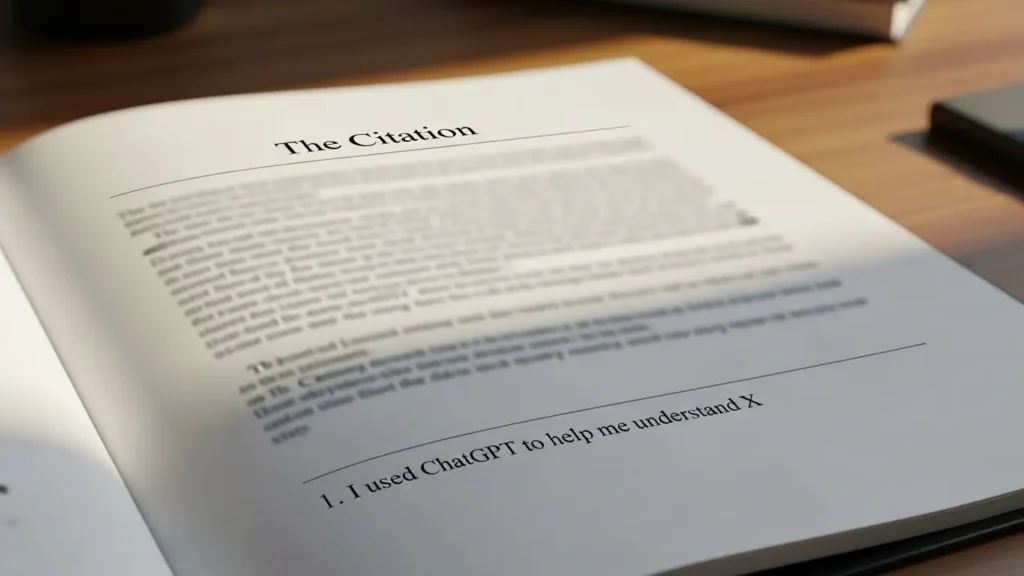
The citation thing is huge, and honestly, a lot of students don’t even know they’re supposed to cite AI-generated content. I think we need to teach it just like we teach how to cite books or websites. When you use ChatGPT for studying and it gives you information you include in your work, just note it. It’s that simple. Say something like, “I used ChatGPT to help me understand X concept” in your process notes. Give credit where it’s due.
Teachers need to rethink assessments anyway. Multiple choice tests that AI can ace in seconds? Maybe not the best measure of learning anymore! But in-class discussions, presentations, and creative projects that require personal experience, these work way better. I’ve seen teachers move toward process-based grading where students show their work and thinking, not just the final answer.
If you ask me, I believe trust but verify is the right approach. Simple checks like asking students to explain their thinking, having them complete parts of assignments in class, or using an AI essay feedback tool to spot potential issues. But honestly? If a student can explain what they submitted and discuss it confidently, they probably did the learning, even if they used AI along the way. That’s the point.
Teaching Critical Thinking in an AI World
Here’s what scares me. Students might just stop thinking if AI keeps doing all the heavy lifting! I mean, why bother figuring stuff out when you can ask a chatbot?
The trick is using AI as a learning tool instead of asking to do the work. Teaching students prompt engineering, for example, makes them think about what they’re actually asking. You can’t get good AI answers without understanding the problem first! Plus, students need to fact-check everything AI tells them because, spoiler alert, AI makes stuff up sometimes.

Getting students to question everything is the goal. Yes, even what AI tells them. Especially what AI tells them! You can tell students to treat AI like that friend who’s usually right but sometimes confidently wrong! You wouldn’t blindly trust everything your friend says without checking, right?
The balance trick is tough but doable. Let students use the best AI learning tools for things like generating practice questions, getting explanations of complex topics, or organizing their notes. But make sure they can explain concepts without AI present. Like, can they solve a problem on paper? Can they discuss the topic verbally? If the answer is yes, they probably actually get it.
This matters way beyond school, and students need to hear that. I talk to business owners all the time, and they all say the same thing. They want people who can think, not just copy AI answers! Being able to use AI effectively is great, but you’re way more valuable if you can also work without it, question its outputs, and know when it’s leading you astray.
Creating Fair Access and Equity
Okay, now is the time for the uncomfortable truth! Not all students have equal access to AI tools, and that’s a big problem for AI ethics in education.
The digital divide is real and it shows up in weird ways with AI. Some students have ChatGPT Plus or other premium subscriptions with the best AI learning tools built in. Others are stuck with free versions that have limited features or wait times. Some kids have new laptops that can run AI apps smoothly. Others are trying to use AI on old phones with spotty internet connections.
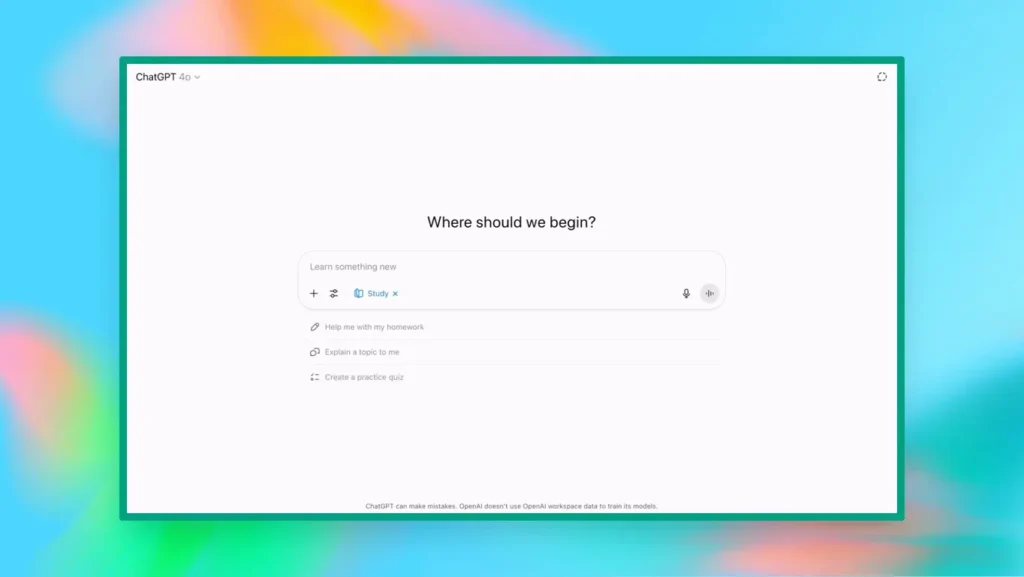
The truth is, wealthier families can afford subscriptions to AI homework tools for parents and students, tutoring apps with AI features, and better hardware. Meanwhile, students from lower-income families might not even have reliable internet at home. I’ve talked to teachers who had to completely rework assignments because they realized half the class couldn’t access the AI tool they recommended.
Building policies that don’t accidentally favor richer students takes some thought. You can’t require the use of premium AI tools for required assignments. You can’t assume everyone has a laptop at home. You need to provide alternatives or make sure the school provides access during school hours.
There are free alternatives that help level things out. Many AI coding learning tools have completely free tiers that work pretty well. Google’s AI tools are available to anyone with a basic account. Some open-source AI models can be accessed for free online. Yeah, they might not be as fancy as the paid versions, but they’re good enough for learning.
The goal should be using AI to close achievement gaps, not make them bigger! When implemented carefully, AI can actually help students who need extra support. An AI tutor that’s available 24/7 can help students who don’t have parents at home to explain homework. AI tools can provide personalized practice for students who need more time with certain concepts.
My last point is, at the end of the day, AI in education should help all students succeed, not just the ones who can afford the fanciest tools! Making sure access isn’t just nice to have, but it’s necessary if we want AI ethics in education to actually mean something.
FAQ
Q: Is it cheating if students use ChatGPT to explain homework problems?
A: Not necessarily. Using AI to understand concepts is like asking a tutor for help. The line is crossed when students copy AI-generated answers without learning the material themselves! Your job is to focus on whether they genuinely understand the work.
Q: How can teachers tell if students used AI inappropriately?
A: Look for sudden writing style changes, answers too polished for the student’s level, or content that doesn’t match class discussions. Better yet, design assignments requiring personal experiences or in-class demonstrations of knowledge.
Q: What AI ethics guidelines should schools implement first?
A: Start with clear usage policies, teach proper methods, and create assessment formats that require critical thinking beyond AI capabilities. Also, train staff and students on responsible AI use together so everyone’s on the same page.
Q: Should elementary schools allow AI in classrooms?
A: It depends on grade level and context. Younger students need foundational skills first. When AI is introduced, it should build learning, not replace basic skill development. Always prioritize age-appropriate critical thinking over convenience.
Q: How do we protect student privacy when using AI tools?
A: Use school-approved platforms with clear data policies, avoid entering personal student information into public AI tools, teach students about digital footprints, and regularly review which tools access what data. When in doubt, ask before sharing.
Conclusion
Look, AI ethics in education isn’t going away, and honestly, it’s only getting more complicated! But that’s not a reason to panic or ban everything. It’s a reason to get smart about this stuff now.
Think of it like teaching kids to drive. You don’t hand them keys and hope for the best! You set rules, teach good habits, and gradually give more freedom as they prove they can handle it. Same deal with AI.
The schools getting this right are the ones having honest conversations. Teachers, students, and parents all need to talk about what works, what doesn’t, and what feels weird! Build your guidelines together. Test them. Fix what breaks. And please, make them simple enough that people actually follow them.
Because the real goal is, we want students who can use AI as a tool but think for themselves. We want teachers who feel confident grading in an AI world. And we want everyone learning in ways that are fair, honest, and actually prepare people for whatever comes next. So, start building those habits today, and you’ll be way ahead of the curve tomorrow.