Best AI Language Learning Apps: Duolingo vs. Babbel vs. AI Alternatives

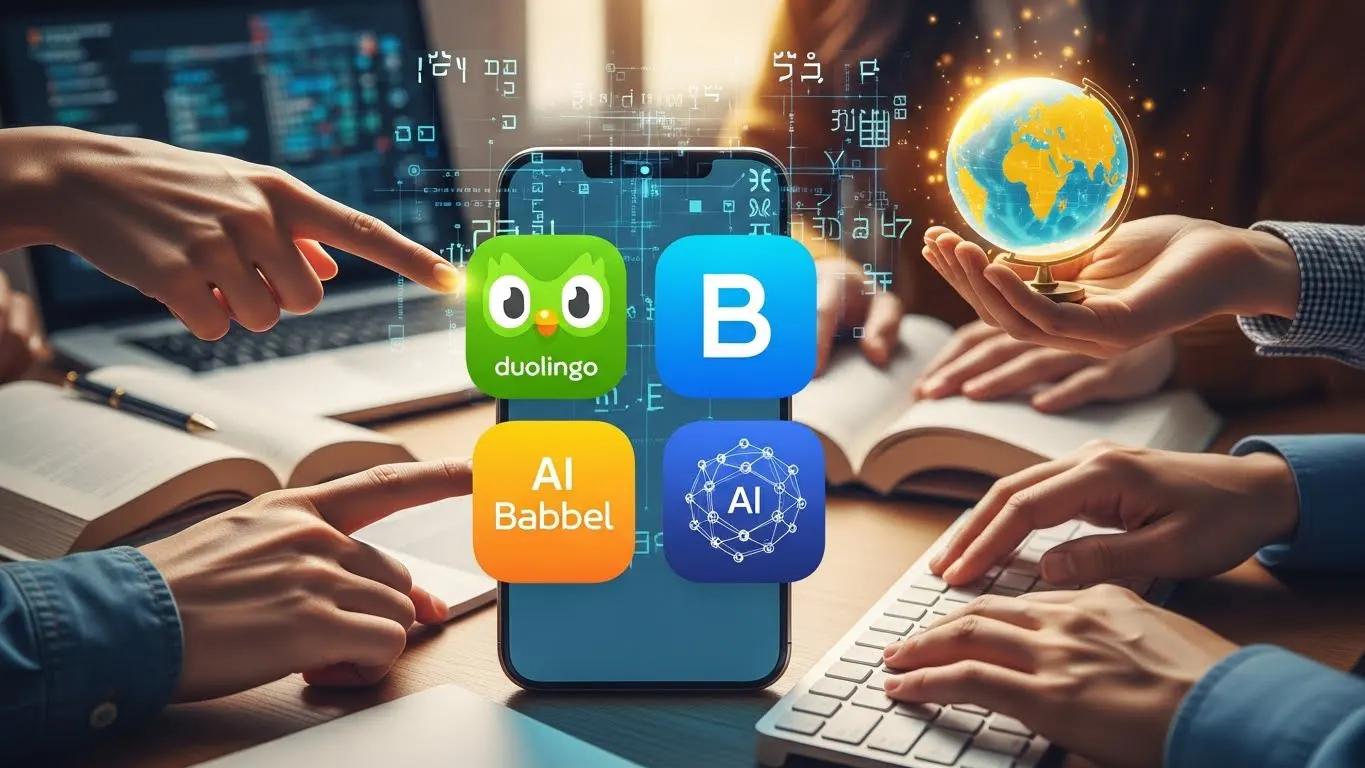
AI language learning apps use smart technology to teach new languages through personalized lessons, real-time feedback, and conversation practice, with top options including Duolingo, Babbel, and other AI alternatives like Langua and TalkPal.
Introduction
Learning a new language sounds exciting until you’re staring at grammar rules that make zero sense, right?! I’ve been there. As someone who loves to grow his skills constantly, I decided to learn a new language years ago (I chose German if you’re wondering!). And honestly? Not only did the old classroom methods fit my schedule, but the traditional studying method was also boring for me!
But here’s the cool part. AI is changing everything, and how we learn languages is just one example. According to Straits Research, the language learning apps market is expected to grow from $7.36 billion in 2025 to a whopping $24.39 billion by 2033. That’s HUGE growth, and it’s happening because these apps actually work.
So, the question is what makes the best AI language learning apps stand out? Some focus on gamification (looking at you, Duolingo), others drill down on conversation practice, and a bunch of new AI-powered tools are trying something totally different. The only question is, which one fits your learning style and goals?
In this guide, I’ll break down the best AI language learning apps available right now. We’re talking real comparisons, honest pros and cons, and practical advice to help you pick the right one. Plus, I’ll show you some AI alternatives that might surprise you. Let’s figure out which app deserves a spot on your phone.
Best Overall in a Glance
Langua
Best For: Conversational practice with realistic AI tutors and 23 languages to choose from
Pros:
- Natural-sounding AI conversations that feel human-like
- Multiple feedback formats including spaced repetition flashcards
- Can speak in your language when stuck
Cons:
- AI occasionally misses corrections
- Trickier for complete beginners to start
- Smaller language selection than major competitors
Babbel
Best For: Intermediate learners seeking structured, professional lessons for real-world scenarios
Pros:
- Professionally designed lessons with clear progression
- Focuses on practical vocabulary and phrases
- AI-powered speech recognition for pronunciation feedback
Cons:
- Limited free content compared to competitors
- Less engaging than gamified alternatives
- Better suited for learners with some experience
Duolingo
Best For: Beginners who want gamified, bite-sized lessons with AI conversation practice
Pros:
- Free version available with core features
- Max plan includes AI roleplay with character interactions
- Huge selection of languages
Cons:
- Advanced AI features are only available in the expensive Max subscription
- Can feel repetitive after extended use
- Lack of control over what you learn
How AI Language Learning Apps Actually Work
Here’s the thing. When I first started looking into language learning apps, I thought they were basically just digital flashcards with fancy animations. Boy, was I wrong!
The tech behind these apps is actually pretty wild. They use machine learning and natural language processing to figure out how you’re doing in real-time. Like, the app literally watches how you answer questions, tracks your mistakes, and then adjusts what it shows you next. I tested this with German a while back, and after I kept messing up the grammar part, the app started throwing more of those exercises at me. It wasn’t random; it knew where I was struggling.
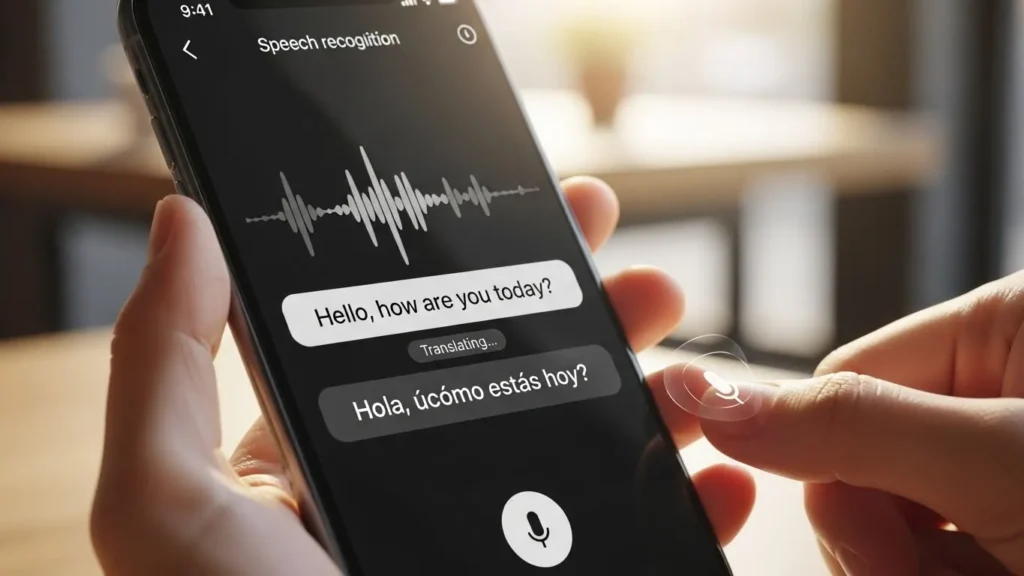
Speech recognition is another big piece. The AI listens to your pronunciation and compares it to native speakers. Honestly, it felt weird talking to my phone at first, but the feedback I got changed my mind. Instead of just saying “wrong,” it would tell me I was stressing the wrong syllable or something like that.
What really sold me on AI language apps is how they spot your weak spots without you even realizing it. Traditional methods (like textbooks or even classrooms) move everyone at the same pace. You either keep up or fall behind! But these apps? They slow down on the stuff you find tough and speed through what you already know. I’ve worked with clients who tried learning languages the old-school way and gave up because it felt too rigid. The personalized approach is unbeatable compared to traditional methods.
The AI chatbots for conversation practice are where things get interesting. You can have actual back-and-forth conversations without the pressure of talking to a real person. I remember testing German greetings with a chatbot and making the same mistake like five times in a row (yeah, I’m not proud of that)! A human tutor might’ve gotten annoyed, but the AI just kept gently correcting me. It’s basically like having a super patient virtual tutor who never judges you for asking the same question twice (or five times in my case)!
And the learning paths? They adjust based on how you’re actually progressing, not some generic timeline. Like, let’s say you’re crushing vocabulary but struggling with grammar, then the app rebalances. It’s kinda like having a personal trainer, but for your brain! It’s also true that some of the best AI learning tools work this way, constantly tweaking the experience so you’re not wasting time on stuff you’ve already mastered.
Duolingo vs. Babbel: The Classic Showdown
Okay, so I’ve used both of these apps, and they’re honestly pretty different even though people group them together.
Duolingo
Best for: People who need gamification to stay motivated and want to learn casually without spending money upfront.
Pros:
- Totally free tier that actually works
- Super addictive with streaks and leaderboards
- Huge range of languages (even fictional ones like Klingon)
- Duolingo Max has GPT features for explanations
Cons:
- Can feel repetitive
- Not great for advanced learners
- The free version has annoying ads
- Less focus on real conversation skills
I used Duolingo to learn German as I mentioned before, and look, the streak system worked on me. I was checking in daily just to keep that stupid bird happy! The lessons are short, like 5-10 minutes, which is perfect when you’re squeezing practice into a busy schedule. But the catch is, after a few months, I realized I could translate sentences pretty well but couldn’t actually hold a conversation (guilty and embarrassed!). The gamification kept me engaged, but it didn’t push me toward fluency.
The Duolingo Max thing with GPT is actually pretty cool though. You can ask things like, “why is this sentence structured this way?” and get a real explanation instead of just memorizing patterns. That feature alone makes it way better than it used to be. Still, the app is designed more like a game than a serious study tool.
Babbel

Best for: Adults who want structured, practical lessons focused on real-world scenarios and don’t mind paying for quality.
Pros:
- Professionally designed courses
- Focus on practical conversation from day one
- Better speech recognition tech
- More grammar explanations
Cons:
- Less “fun” than Duolingo!
- Fewer language options
- Can feel more like homework
Babbel takes itself way more seriously. I tried it for German, and the lessons felt more like an actual class. They start with practical stuff (ordering food, asking directions, introducing yourself, things like that). Each lesson builds on the last one in a logical way, and there’s a bigger emphasis on grammar rules. Which is great if you want to actually understand the language, but kinda boring if you’re used to Duolingo’s game vibe.
Speech-wise, Babbel’s tech is honestly better. It catches mistakes more accurately and gives you better feedback on pronunciation. The AI features aren’t as flashy as Duolingo Max, but the whole app feels more focused on getting you to conversational fluency.
A quick comparison, if you’re the type who needs points and rewards to stick with something, Duolingo wins. If you’re serious about learning and want a structured path, Babbel’s probably better. And honestly? Some people I know use both; Duolingo for daily practice and Babbel for deeper lessons.
AI-First Alternatives That Might Work Better
So here’s where things get really interesting. There’s a whole new wave of apps that put AI conversation practice front and center, and they’re kinda changing the game.
Langua
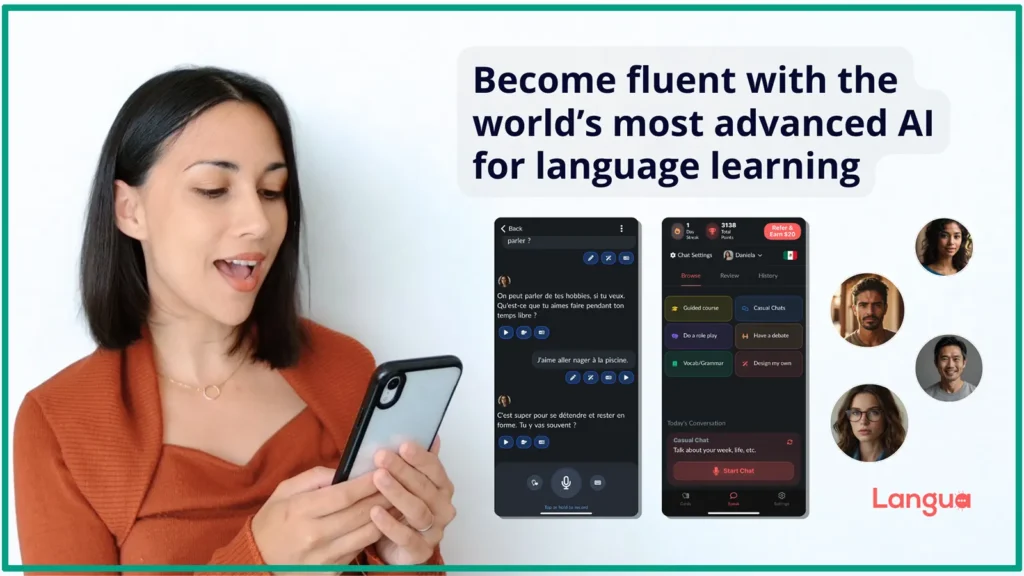
Best for: Learners who want realistic conversation practice with minimal gamification and more natural dialogue.
Pros:
- Focuses on actual conversations over games
- Real-time corrections during practice
- More natural dialogue scenarios
- Good balance of structure and flexibility
Cons:
- Not as polished as Duolingo or Babbel yet
- Smaller user base means less community
- Limited languages compared to big players
I tested Langua just to see what’s what when a friend recommended it, and the conversation focus is legit. Instead of translating random sentences, you’re having actual dialogues about realistic stuff (booking a hotel, chatting about weekend plans, complaining about the weather, etc). The AI jumps in with corrections as you go, which is way more helpful than finding out you messed up three exercises later!
TalkPal
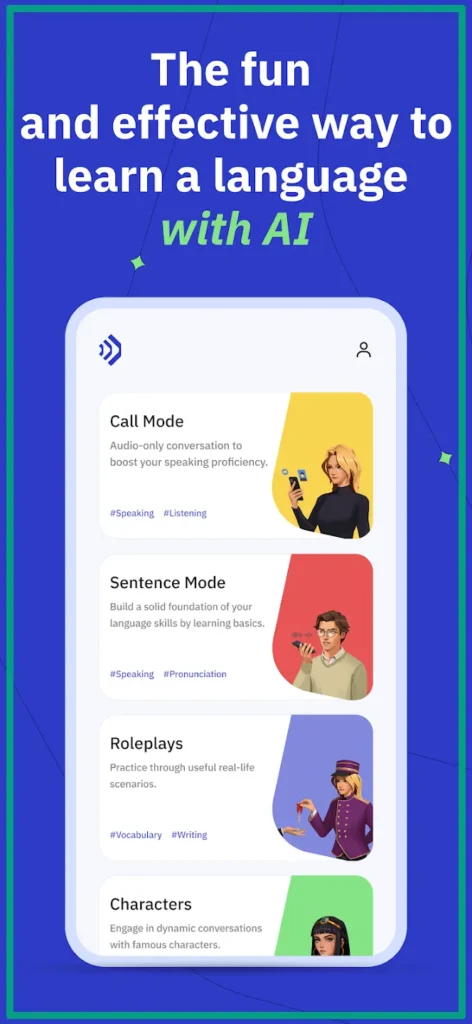
Best for: People who want to practice speaking and aren’t afraid to have full conversations with an AI from day one.
Pros:
- 3D avatars make it feel more like talking to a person
- Instant feedback on pronunciation
- Lots of different conversation scenarios
- Works well for shy learners
Cons:
- Can feel awkward at first
- Needs a good internet connection
- More expensive than traditional apps
- Avatars can be kinda uncanny
A client of mine loves TalkPal because she gets anxious talking to real people in a new language! The 3D avatar thing is weird at first (I’m not gonna lie), but it does make the practice feel more real than just typing responses. You’re actually speaking out loud, and the AI responds like a person would. It’s similar to what you’d find in some of the best AI tutoring platforms where the focus is on interactive and real-time learning.
Praktika
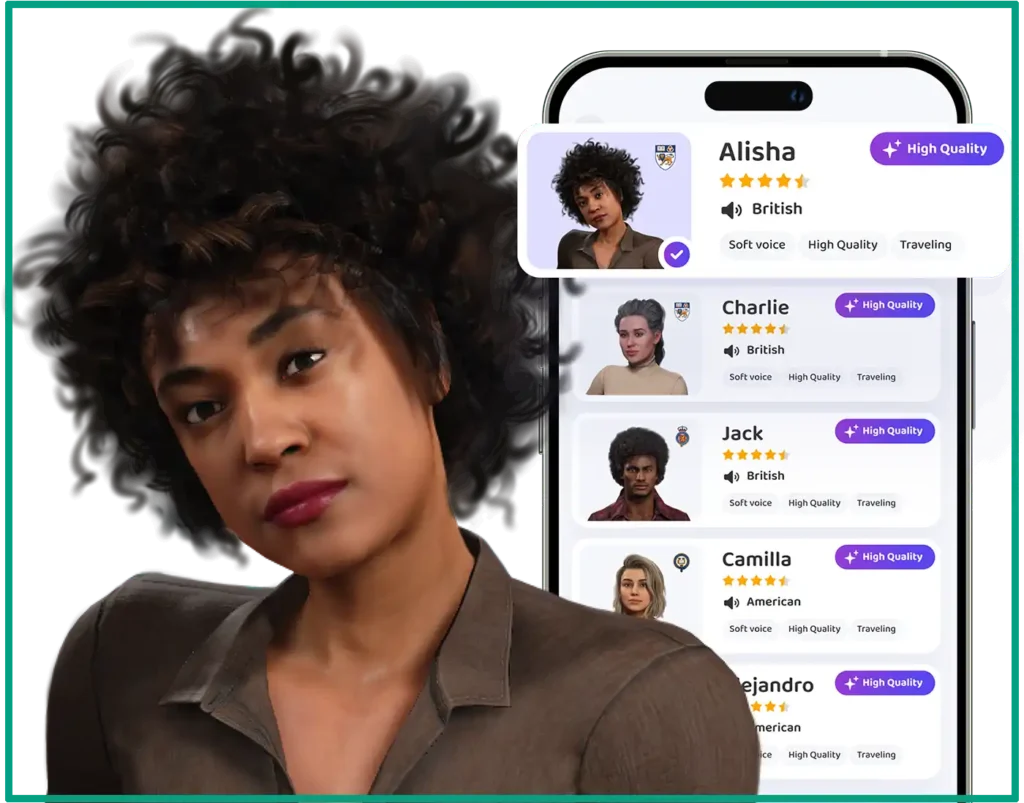
Best for: Building speaking confidence through structured AI conversations without feeling overwhelmed.
Pros:
- Less pressure than talking to humans
- Structured conversation paths
- Good for intermediate learners
- Affordable compared to human tutors
Cons:
- Limited customization options
- Smaller language selection
- Conversations can feel scripted
- Not great for complete beginners
I tried Praktika for a while and it sits somewhere between a chatbot and a real tutor. The conversations follow a script, but you still have to think about it. It’s especially good if you know some basics but freeze up when trying to actually speak! The AI is patient as hell and doesn’t judge you for taking forever to form a sentence (I wish I were that patient!).
Kippy AI
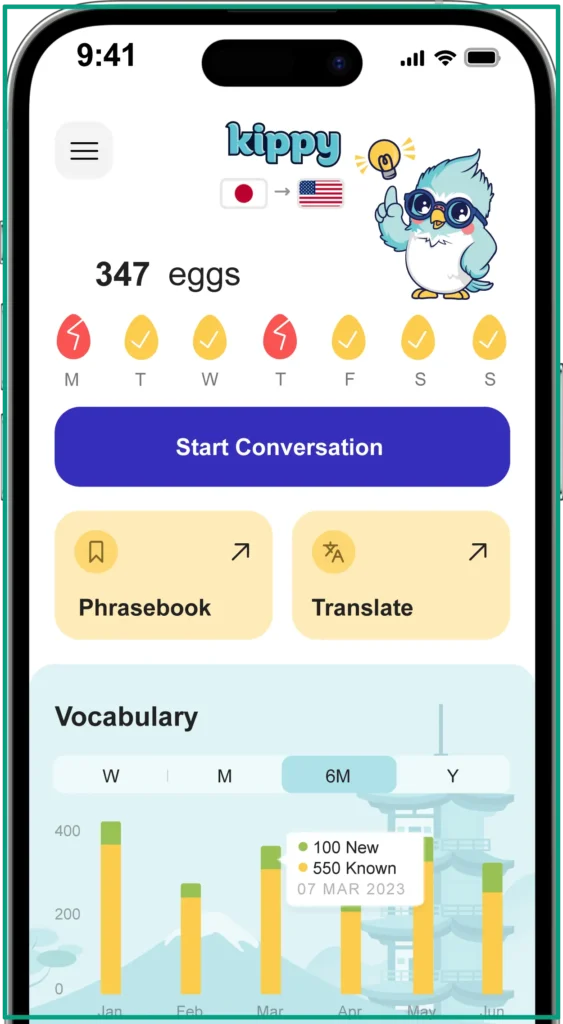
Best for: Daily low-pressure practice without big time commitments or complicated lesson structures.
Pros:
- Quick daily practice sessions
- Very beginner-friendly
- No pressure to complete lessons
- Works as a supplement to other apps
Cons:
- Too casual for serious learners
- Limited depth in lessons
- Not enough grammar instruction
- Can feel too easy after a while
Kippy is basically the chill option! You can use it on days when you don’t feel like diving into a full lesson but still want to practice a bit. It’s like the difference between a full workout and just taking a walk (both are useful), but for different reasons. This kind of casual approach is also found in various of the best free AI study tools that focus on making learning accessible without overwhelming you.
Now that you are a bit familiar with these options, the question is, who benefits most from these? And the answer is, people who already know the basics and need conversation practice. If you’re starting from zero, Duolingo or Babbel might be better to build vocabulary first. But if you’ve been studying for a while and just can’t seem to actually speak the language, these AI conversation apps are legit.
Also, a lot of them are starting to add community features, matching you with other learners or even native speakers for practice. It’s not as robust as language exchange apps yet, but it’s getting there. The goal seems to be combining AI practice with real human interaction, which honestly makes a ton of sense.
Picking the Right App for Your Learning Goals
Okay, so you’ve got all these options. Now what?
First, figure out what you actually want. Are you trying to build vocabulary from scratch? Work on speaking fluency? Master grammar rules? Because different apps are good at different things, and matching your goal to the app’s strength is smart thing to do.
If you’re all about vocabulary building, Duolingo‘s actually great. Also, the spaced repetition system works, and you’ll learn a ton of words pretty quickly. But if you want speaking fluency, you need something with more conversation practice, like TalkPal or Langua. Or how about grammar mastery? Babbel‘s probably your best bet because they actually explain the rules instead of just making you memorize patterns.
Budget matters too. And look, I get it. Not everyone wants to pay for a subscription. Duolingo’s free tier is legit good enough to get started. But if you’re serious and have the budget, paying for something like Babbel or one of the AI conversation apps can speed things up. The free vs paid thing isn’t about one being better; it’s about what features you actually need. Like, when I talked about AI ethics in education, it’s worth noting that free tools often collect more user data, while paid apps typically have better privacy policies! Something just to think about.
Here’s a tip. Test before you commit. Most apps have free trials or money-back guarantees. Actually use the app for a week or two before deciding. I know people who thought they’d love gamification and then realized it annoyed them, or people who thought they wanted structured lessons but actually preferred freestyle conversation practice.
And honestly? Combining multiple apps works really well. For example, you can use Duolingo for daily vocabulary, Babbel for structured lessons, and TalkPal when you actually need to practice speaking. It sounds like overkill, but each one fills a different gap. Plus, switching between apps keeps things from getting stale!
Now, an important question is, when should you switch apps? If you’ve been using something for a few months and you’re not progressing anymore, or if you’re straight-up bored and avoiding practice, it’s probably time to try something new. Apps are tools, not commitments. Don’t feel bad about switching things up!
Staying consistent is the real challenge. I tell people to pick a time of day and stick to it. It can be during morning coffee, lunch break, before bed, whatever. The app matters way less than actually showing up every day. Even just 10 minutes is better than nothing. And if you miss a day? Who cares! Just pick it back up the next day.
At the end of the day, the best AI language learning apps are the ones you’ll actually use. I know that sounds obvious, but I’ve seen too many people download the “best” app and then never open it! Start with something free, see if you stick with it, and then maybe invest in something fancier. The perfect app doesn’t exist; just the one that works for you.
FAQ
What is the best AI language learning app for beginners?
Duolingo works great for beginners because of its gentle learning curve, gamified lessons, and free tier. The app breaks everything into small chunks and keeps you motivated with streaks and achievements.
Can AI language apps make you fluent?
AI apps are excellent tools but usually can’t take you to full fluency alone. They’re best for building vocabulary, practicing grammar, and daily conversation. Most learners need real-world practice or structured courses for advanced fluency.
Are paid AI language learning apps worth it?
Paid apps often provide better features like unlimited lessons, no ads, offline access, and advanced AI conversations. For serious learners, the investment typically pays off in faster progress and better engagement.
Which AI language app has the best conversation practice?
Apps like Langua, TalkPal, and Praktika focus specifically on conversation with realistic AI tutors. They offer more natural dialogue practice than traditional apps, though they typically cost more than gamified options.
Conclusion
Look, finding the best AI language learning apps comes down to knowing how you learn. Duolingo keeps things fun and simple, Babbel brings the professional touch, and options like Langua focus on making you sound natural when you speak.
The market’s growing like crazy for a reason. These tools actually help people learn languages without spending thousands on classes or stressing about embarrassing mistakes! I’ve seen it work for my own German learning, and I help others find tools that fit their schedules too.
Try a few apps before settling on one. Most offer free trials or basic versions, so you can figure out what clicks for you. And honestly? Using two apps together often works better than sticking to just one.
Whatever you pick, the key is consistency. Even 10 minutes daily with the right AI language learning app beats occasional hour-long sessions! Start today, stick with it, and you’ll surprise yourself with how much you pick up. Your future multilingual self will thank you!