How Parents Can Monitor Their Child’s AI Tool Usage for Homework


Parents can monitor their child’s AI homework tools by setting clear usage rules, having regular conversations about AI ethics, checking browser history, using parental control software, and teaching kids when AI help crosses into dishonesty.
Introduction
Look, I get it. I met a lot of worried parents trying to figure out if their kid is actually using AI to learn or just asking ChatGPT to do all the work, including homework for them! You’re not alone in this mess.
Here’s the thing though. A 2025 survey by Save My Exams found that 75% of students now use AI for their homework, and honestly? Over half of parents (54%) admitted they’re already checking whether their kids are using these tools. So when I say I get it, I totally understand the level of anxiety those parents are dealing with, because after all, the future of their kids is at stake.
On the other hand, here’s what nobody talks about. Monitoring AI homework tools for parents isn’t about playing detective! It’s about teaching your kid the difference between using AI as a study buddy and letting it do all the thinking. Because right now, these tools are everywhere, they’re not going away, and your child needs to learn how to use them without becoming totally dependent.
So yeah, this guide will show you practical ways to keep tabs on AI homework tools without turning you into the screen-time police! Let’s break down what actually works.
Why AI Homework Tools Are Different From Regular Study Help
Okay, so here’s the thing. When I was growing up, “homework help” meant asking my parents, flipping through a textbook, or maybe calling a friend. Worst case? You’d wait until the next time you see the teacher at school. But now, AI homework tools for parents change everything. They’re a whole different beast.
Traditional resources like calculators or textbooks require kids to do the thinking part. A calculator does the calculating part, sure, but you still have to set up the equation. You need to flip through a textbook, which means you have to read and understand it first. Even a tutor makes you work through problems step by step. They’re guides, not ghost writers!
Now, how about AI tools like ChatGPT, Grammarly, and those fancy math solvers? They can literally do the entire assignment for you. And I mean everything! Need an essay on the French Revolution? Done in 30 seconds. Stuck on a calculus problem? The best AI homework helper apps will solve it, show the work, and explain every step. That’s not just help; that’s replacement.
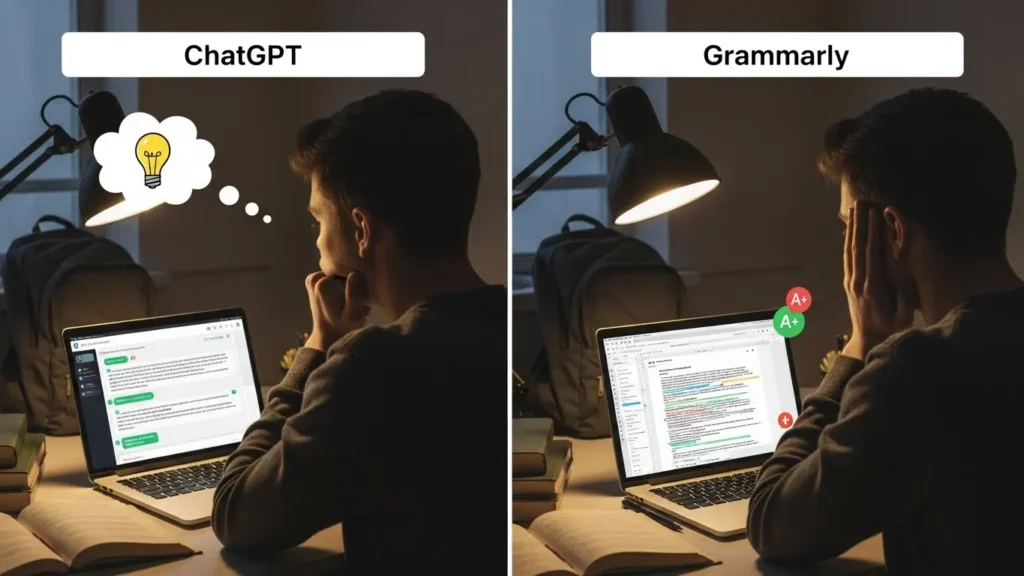
The line between support and thinking gets real blurry, real fast. When my friend’s daughter used AI to “check” her essay, it ended up rewriting half of it! She didn’t learn anything, just copy-pasted the suggestions. Compare that to when she worked with a tutor who pointed out her weak thesis but made her fix it herself. See the difference?
But also, the speed factor changes everything. Kids are used to instant answers now. Why struggle with a tough problem for 20 minutes when ChatGPT spits out the answer in seconds? That instant gratification messes with their whole approach to learning. They start reaching for AI the moment something gets hard, before they’ve even tried to figure it out themselves!
And yeah, AI can explain concepts. It’s actually pretty good at breaking down complex ideas into simple terms. But (and this is important) just because a kid reads an AI explanation doesn’t mean they understand it! I’ve seen this with my nephew. He’d ask ChatGPT to explain something, read the response, and think he got it. Then I’d ask him one follow-up question and… oh boy! The knowledge didn’t stick because he didn’t wrestle with it.
The scary part? These tools write in ways that sound smarter than most middle schoolers. So when a 7th grader suddenly turns in an essay with perfect syntax and college-level vocabulary, something’s up!
Simple Ways to Check What AI Tools Your Child Is Using
Look, I’m not suggesting you turn into some kind of homework detective or a monitoring beast! But you should know what’s going on, especially since the best AI education apps are literally everywhere now. Kids aren’t always trying to be sneaky! Sometimes they genuinely don’t realize certain AI tools count as “help.”
Start with the basics, which is the browser history. I know, I know, it feels nosy! But hear me out. You’re not reading their diary, you’re just checking what tools they’re using for school (that’s the line). Look for sites like ChatGPT, Claude, Quizlet AI, Photomath, or Grammarly. Check maybe once a week. Don’t go overboard, but stay aware.
You should also recognize the common players. ChatGPT is the big one everyone knows about. Quizlet went from flashcard site to full-on AI answer generator. Photomath lets kids point their camera at a math problem and get instant solutions. Grammarly isn’t just spell-check anymore; it rewrites entire paragraphs. And honestly, there are dozens more popping up every month!
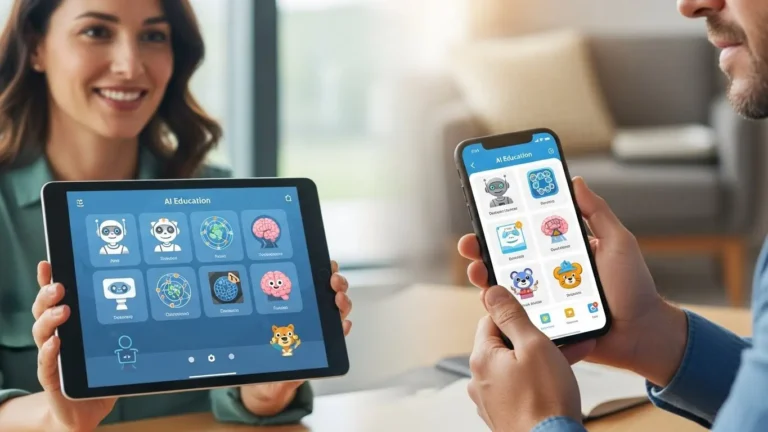
For younger kids with tablets or phones, check their download history and screen time reports. Both iOS and Android track this stuff. If you see a new app you don’t recognize, Google it. Five minutes of research can tell you if it’s a game or an AI homework tool they’re hiding!

Here’s a tip that actually works. Just ask them! Straight up. “Hey, what tools are you using for homework these days?” Most kids will tell you if you approach it without accusations! My client tried this with her teenage son, and he was surprisingly honest about using AI for brainstorming essay ideas. No drama, just conversation.
Now, about the work itself. Sometimes you can tell just by looking at it. Sudden jumps in quality are a dead giveaway. If your kid usually writes like a normal 8th grader (short sentences, simple words, maybe some grammar mistakes) and suddenly submits something that reads like a college essay? Yeah, AI probably helped!
Watch for overly formal language. Phrases like “in conclusion” or “it is imperative that” from a 12-year-old. It’s suspicious! Also, if they’re writing about topics you know they haven’t studied yet, that’s another red flag. AI loves pulling in outside information that sounds smart but wasn’t actually taught in class!
Last point here, the best AI homeschool tools can actually be helpful for homeschool parents, but even then, you need to know when your kid is using them to actually learn, vs just getting answers.
Setting Up Boundaries That Actually Stick
Okay, this is where most parents mess up. They either ban AI completely (which doesn’t work) or they don’t set any rules at all (which also doesn’t work)! You need something in the middle that your kid will actually follow.
Try creating something like a family AI usage agreement. Sit down together and talk about what’s okay and what’s not. Write it down. Be specific. “You can use AI to brainstorm ideas but not to write final drafts.” Or “AI is fine for checking your math work after you’ve tried it yourself.” Having it in writing makes it real.
But here’s the key. You need to explain the why behind your rules. Kids are way more likely to follow guidelines when they understand the reasoning. Don’t just say “because I said so!”; I know I wouldn’t listen to that reason! Tell them something like learning to think through problems themselves is what builds their brain. Or explain that future teachers won’t allow AI, and they need to be ready for that. Whatever works for your kids.
I actually think different subjects need different rules. Like, maybe AI for brainstorming an essay topic is totally fine, but using it to write the actual essay isn’t. Or using the best AI tutoring platforms to get a concept explained is okay, but having AI solve all your homework problems isn’t. It depends on what skill they’re supposed to be learning.

Time-based boundaries work well too. Like, no AI during tests or timed assignments, which is pretty obvious! But also think about homework flow. Maybe they have to try a problem for 10 minutes before they can ask AI for help. That builds persistence.
One thing I learned from a colleague. Teach kids to cite when they use AI, just like any other source. If ChatGPT helped them understand photosynthesis, they should mention that in their notes or on their assignment. It creates accountability and honesty. Plus, it’s good practice for academic work later on.
And definitely, definitely talk about their school’s academic honesty policies. Every school is figuring out its AI rules right now, and your kid needs to know what their specific school allows. Some schools are cool with AI for certain things. Others have zero tolerance. You can’t just assume; you have to check. Questions about AI ethics in education are coming up in every school district now, and policies are all over the place.
The goal isn’t to completely block AI. That’s impossible and probably not even helpful. The goal is to make sure your kid knows when they’re crossing a line and why that matters.
Teaching Your Kid When AI Help Becomes Cheating
This is honestly the hardest part because the line isn’t always crystal clear. I’ve had to think through this myself, and it’s tricky even for adults.
Start with the basic difference, which is using AI to understand a concept vs just copying answers. If your kid asks ChatGPT to explain how photosynthesis works, reads the explanation, and then writes their own answer? That’s learning. But if they ask ChatGPT to write three paragraphs about photosynthesis, just to copy-paste it? That’s cheating.
Here are a few real scenarios because that’s where it gets complicated:
- Is it okay to use AI to check your work?
Honestly, I think yes, if they’ve already done the work first. It’s like having a second set of eyes. But if they’re using AI to do the work and then just reviewing what it wrote, that’s backward! - What about using AI to write an outline?
This one’s a gray area! I’d say it depends on the assignment. If the whole point is learning to organize ideas, then AI shouldn’t do it for them. But if outlining isn’t the main skill being taught, maybe it’s fine as a starting point. - How about they ask AI to explain something they don’t understand?
Yeah, I think so. That’s basically a type of learning. The key is what they do with that explanation. Do they read it, try to understand it, and then apply it themselves? Or do they just copy-paste without thinking?

You need to help your kid see AI as a tool, not a shortcut. Tools require skill to use properly. A hammer is a tool, but you still have to know how to swing it! When we talk about the best AI homework helper options, they’re only “best” when used correctly; to support learning, not replace it.
Also, you need to share real stories or talks about when over-reliance on technology backfires. Maybe you used spell-check so much that you forgot how to spell certain words yourself (I’m guilty myself!). Or relied on GPS and now can’t navigate without it. Those are relatable examples that show how depending too much on tools weakens our own abilities.
At the end of the day, the question is simple. Are they learning or are they cheating? If using AI means they understand the material better and could do it without AI next time, they’re probably fine. If they couldn’t explain it themselves, that’s cheating!
FAQ
Q: How can I tell if my child used AI to write their homework?
Look for sudden changes in writing style, vocabulary above their level, or perfectly structured responses. AI-generated text often sounds formal and uses complex sentence structures. Also, ask your child to explain their work out loud.
Q: Should I ban AI tools completely for homework?
Probably not. Total bans can backfire and prevent kids from learning valuable skills. Instead, set clear rules about when and how AI tools can be used. Focus on teaching responsible use rather than prohibition.
Q: What are the most popular AI homework tools kids use these days?
ChatGPT leads the pack, but kids also use Grammarly for writing, Photomath for math problems, and Quizlet AI for studying. New tools pop up constantly, so stay informed about what’s trending.
Q: How often should I check my child’s AI tool usage?
Check weekly for younger kids, maybe less for teens. But honestly? Regular conversations about their homework process work better than constant monitoring. Build trust while staying aware.
Q: Can schools detect when students use AI for assignments?
Some schools use AI detection software, but it’s not perfect. These tools can flag AI content but also create false positives! The bigger issue is teaching kids why honest work matters, not just avoiding detection.
Conclusion
The bottom line is, monitoring your kid’s AI homework tools isn’t about being some sort of homework detective freak! It’s about teaching them to use these crazy, powerful tools without letting the tools do all their thinking.
Look, AI isn’t going anywhere. Your child will use it in college, at work, and pretty much everywhere else. So the question isn’t really “should they use it?” It’s more like “how do we teach them to use it without becoming dependent on it?” That means setting clear boundaries, having real conversations about what counts as cheating, and yeah, occasionally checking in on what tools they’re actually using.
Start small. Pick one tip from this guide. Maybe it’s setting up weekly check-ins, or creating a family agreement about how to use AI, or just downloading a monitoring app. What matters is that you’re paying attention and teaching your kid the difference between getting help and getting it done for them. Because honestly? Learning how to learn is way more important than any single homework assignment.
Trust your gut. If something feels off about their work, talk to them. But remember, you’re not trying to catch them doing something wrong! You’re trying to help them build habits that’ll serve them for life.