How to Use AI for Sales Forecasting and Pipeline Management


AI sales forecasting uses machine learning and predictive analytics to analyze historical data, customer behavior, and market trends, helping businesses predict future revenue with better accuracy than traditional methods while cutting sales cycles.
Introduction
Look, we’ve all been there, done that. I’m talking about building sales forecasts the old-school way with things like spreadsheets, gut feelings, and a whole lot of crossed fingers! And you know what? It was exhausting and pretty inaccurate, and it’s even backed by research.
A report from a 2025 Gartner research published by Forecastio says that less than 50% of sales leaders have high confidence in their organization’s forecast accuracy, and fewer than 20% of sales organizations achieve a forecast accuracy of 75% or greater. That’s a real problem when you’re trying to run a business!
But here’s where things get exciting. AI sales forecasting is changing the game for small businesses like ours. I’m not talking about some sci-fi robot taking over your sales team! I’m talking about practical tools that crunch your data, spot patterns you’d miss, and actually help you predict what’s coming down your pipeline.
In this guide, I’m going to show you exactly how to use AI for sales forecasting and pipeline management. And I’m only after real strategies that work for solopreneurs and small business owners who need better numbers without hiring a data science team.
What AI Sales Forecasting Actually Means (And Why You Should Care)
Okay, so AI sales forecasting is basically a smart software that learns from all your past sales data and then makes educated guesses about what’s coming next. I know that sounds simple, but honestly, when I first heard about it a few years back, I thought it was some complicated tech thing only big companies with massive IT departments and budgets could use!
Here’s the thing though. Traditional forecasting is mostly you staring at spreadsheets, maybe throwing some formulas around, and making your best guess based on gut feeling. I used to do this in the past, and it was exhausting. You’re manually tracking trends, trying to remember if December was slow last year, hoping you’re not totally off base.

AI sales forecasting on the other hand, flips that whole process. The software automatically spots patterns in your data, updates predictions in real-time as new info comes in, and catches trends you’d never notice on your own. It’s like having a really smart analyst working 24/7, except you’re not paying someone’s salary!
But the real reason this matters for small businesses is better cash flow planning. You actually know when money’s coming in. You can make smarter calls about inventory, like not ordering too much or running out at the worst time! And of course, you know when it makes sense to hire someone new vs waiting another quarter.
And the best part is that you don’t need to be a tech wizard to use these tools anymore. Most of them are pretty straightforward these days. I’m proof of that.
How AI Actually Predicts Your Sales (Without the Tech Mumbo-Jumbo)
So AI basically looks at three big buckets of information to figure out what’s probably going to happen with your sales. First, there’s your historical sales patterns (what you sold last month, last quarter, last year). Then it analyzes customer behavior signals, like how often they’re opening your emails or visiting your website. And finally, it considers external market factors, which is fancy talk for stuff happening in your industry or the economy.
Machine learning (which is just the AI learning from examples over time) spots things humans totally miss. Like, you might look at your pipeline and say to yourself everything looked fine! But the AI jumps in and flags that your deals were taking 30% longer to close than usual during certain months. And when you dig deeper, you realize it was tied to something like the budget cycles you hadn’t even thought about! It can pick subtle things humans usually lack, like seasonal dips, buying patterns, warning signs that a deal’s about to fall apart, and a bunch of other valuable info.

Predictive analytics is the part that actually makes predictions. It takes all your CRM data and tells you which deals are most likely to close and when. I remember when I first saw this in action, it felt a bit like magic. The system ranked the opportunities by probability, and I was skeptical at first. But it was right way more often than I could ever been!
Here’s a real example that happened to one of my dear friends. By now, you should know that AI can tell you which leads are actually hot vs the ones just wasting your time. It predicts when customers might churn, like if someone’s engagement drops off a cliff, you get an alert! Or when it spots upsell opportunities you wouldn’t catch otherwise. That’s exactly what happened to my friend’s business when his client bought a small package, and the AI suggested they were a good fit for an upgrade based on their usage patterns. Turned out to be totally right.
And the cool part is the system gets smarter the more you use it. It learns from your actual results (what closed, what didn’t, or why, etc) and adjusts its predictions. So six months in, it’s way more accurate than when you started.
Setting Up AI for Your Sales Pipeline (Step-by-Step)
Picking the right tool is the first step, and honestly, it’ll trip up many small business owners initially. There are options for basically every business size and budget. If you’re a solopreneur, you don’t need the enterprise-level stuff. You can use a mid-tier tool most of the time, and at the same time, test a few cheaper ones when you’re just starting out. A friend of mine runs a one-person consulting business and uses a basic AI CRM for small business that costs maybe $30-50 a month and does solid forecasting.
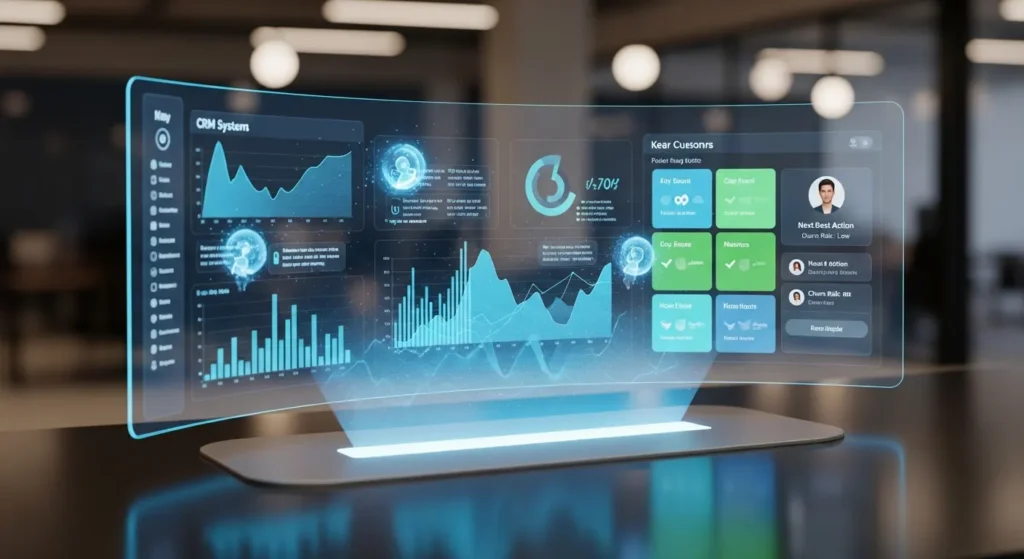
Next, you need to feed the system the right data. This means your past sales records, like at least six months to a year if you have it. Things like customer interactions, deal stages, win and loss history. The more complete your data, the better the predictions.
But here’s where people mess up! You gotta clean your data first. Garbage in, garbage out is real. I saw people had duplicate contacts, deals stuck in weird stages from years ago, and gibberish notes! You need to spend a day or two tidying things up before you connect the AI. Delete the junk, standardize how you label things, and make sure deal stages actually make sense.
Most good AI tools plug right into whatever you’re already using. Whether it’s Salesforce, HubSpot, Pipedrive, whatever. Integration is usually pretty smooth. I remember setting one up and thinking it’d take forever, but it was maybe an hour of clicking through setup screens and connecting accounts.
When you’re ready to do this, you need to set aside enough time for this to work. Most small businesses can get up and running in 2-4 weeks. That includes setup, data cleaning, and getting your team trained on how to use it.
And remember, one big and common mistake is not training your team. If your salespeople don’t understand why the AI is making recommendations, they’ll ignore it! It’s like doing all these works for nothing! Also, some folks set everything up and then never actually look at the insights (same thing). The AI can’t help you if you’re not paying attention to what it’s telling you.
Managing Your Pipeline with AI Insights (The Practical Stuff)
I recommend that the first thing you do every morning is check your lead scores. The AI ranks all your leads based on how likely they are to close, so you know exactly where to spend your time, and if you do it right, the results could be amazing. This is where you stop wasting hours on tire-kickers and focus on real opportunities!
Deal risk alerts are another big one. The AI watches your opportunities and warns you when something’s going sideways! Like if a deal that was moving fast suddenly stalls, or if a contact stops responding. In those cases, you need to jump in and save those deals. And if those alerts didn’t exist, you’d miss a lot of opportunities. In fact, without them, you would’ve just found out at the end of the month that the deal fell through!
Real-time pipeline health tracking means you’re not waiting until the end of the month to see if you’re on track. You know every day where you stand. It’s way less stressful than the old “fingers crossed” approach.
You can also use AI for territory planning and setting quotas that actually make sense. Instead of just guessing or copying last year’s numbers, the system tells you what’s realistic based on the data. And honestly, this can help avoid burning out by setting impossible targets!
And then there’s the automated workflow stuff. Things like follow-up reminders so you don’t forget to reach out. Or next-best-action suggestions (like “call this person now” or “send a proposal”) based on what’s worked in similar situations. Even personalized outreach timing (like knowing the best day and time to contact someone). All you have to do is set up a workflow that automatically suggests when to follow up based on each lead’s engagement patterns, and you’ll see that the response rates will go up noticeably.
But look, at the end of the day, the tech is just a tool, not a replacement for building relationships. I still trust my gut sometimes, even when the AI says something different. If you know a client really well and the AI’s prediction seems off, go with your instinct. Combining AI insights with human judgment is where the magic really happens.
Oh, and if you’re doing any kind of market positioning or competitor tracking, AI competitive analysis can feed into your pipeline strategy too. Knowing what your competitors are up to helps you prioritize which deals to push harder on.
Measuring Results and Getting Better Over Time
You gotta track the right metrics to know if this is actually working. Here are a few big ones:
- The forecast accuracy rate is probably the biggest. How close were your predictions to what actually happened?
- Pipeline velocity matters too, which is basically how fast deals move through your pipeline.
- Win rate by segment shows you which types of deals you’re best at closing.
- And average deal size tells you if you’re moving upmarket or downmarket over time.
Here’s what I do. Every month, I compare the AI’s forecasts to our actual results. If the predictions were off, I try to figure out why. Maybe we had an unusual month, or maybe the AI needs more training data. Some tools let you adjust the models yourself, which is pretty handy.
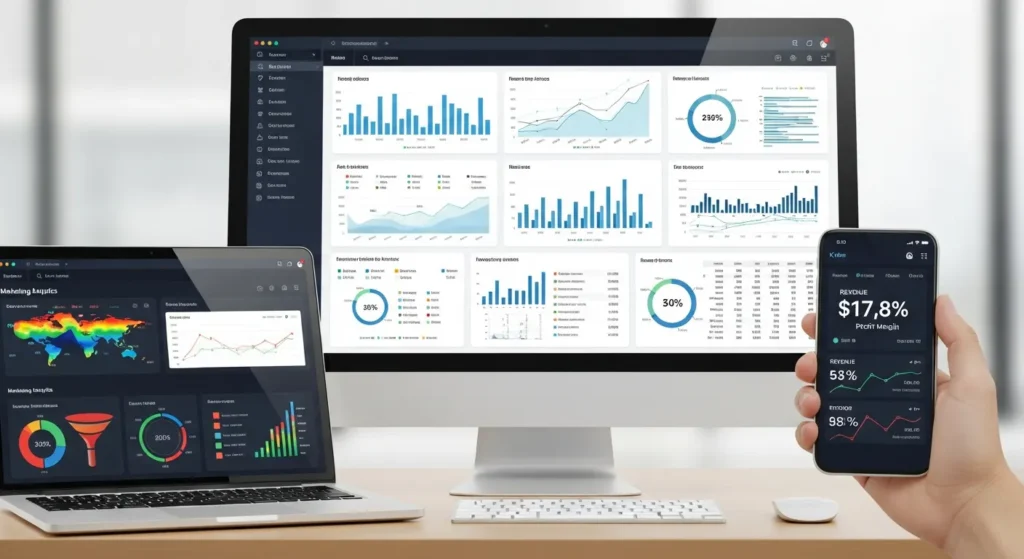
Testing different scenarios is one of my favorite features. You can ask “what if we focus on enterprise deals instead of small businesses?” or “what happens if we cut prices by 10%?” The AI runs the numbers and shows you the likely impact. It’s like having a crystal ball, except based on actual data. You can use this all the time when let’s say planning a quarterly strategy. AI business reporting tools can show you these scenario analyses in visual dashboards that make it way easier to explain to your team or investors.
Next is realistic expectations, which is important. You won’t get perfect predictions right away. Or ever, really! But you should see improvement within 2-3 months of using the system. If your forecast accuracy isn’t getting better, something’s wrong. Maybe your data is still messy, or maybe the tool isn’t a good fit.
I talked about this before, but getting your sales team to actually trust the AI recommendations? That’s its own challenge. I think the best approach is showing them when the AI was right and they were wrong! Not in a mean way, of course! Just maybe something informative, like “hey, remember when the system said this deal was risky and we pushed anyway? Yeah.” After a few examples, people start paying attention.
And finally, you should reassess your tools every six months or so. If accuracy isn’t improving after half a year, either you need to fix how you’re using it, or you need different software. But mostly it’s the tool, not you!
FAQ
Q: Do I need a huge sales team to make AI forecasting worth it?
Nope! Even solopreneurs with a small pipeline can benefit. The key is having at least 6-12 months of sales history and consistent data. Some tools are built specifically for small businesses with affordable pricing.
Q: Will AI sales forecasting replace my sales team?
Not even close! AI handles the number crunching and pattern spotting, but humans still close deals. Think of it as giving your team a really smart assistant that never sleeps and loves spreadsheets way more than you do!
Q: How accurate can AI sales forecasting actually get?
Accuracy really depends on many things, especially your data quality and how consistently you use the system. Remember, they’re not magic, just really good at math.
Q: What if my sales data is messy or incomplete?
Start by cleaning what you have. Even basic data cleanup can help. Most AI tools can work with imperfect data, but the cleaner your records, the better predictions you’ll get. It’s worth spending time on this upfront.
Q: How long before I see real results from AI forecasting?
You’ll typically see initial improvements within 60-90 days as the AI learns your patterns. The longer you use it, the smarter it gets. But don’t expect overnight miracles; give it at least one full quarter to really prove itself.
Conclusion
So yeah, AI sales forecasting isn’t some far-off future thing anymore. It’s here, it’s accessible, and honestly, it’s becoming pretty essential if you want to stay competitive.
The cool part? You don’t need a massive budget or a data science degree to get started. Pick a tool that fits your business size, feed it your sales data, and let it do what it does best, which is finding patterns and predicting outcomes way better than any of us could manually! Just remember, the AI is there to help you make smarter decisions, not to replace your judgment or your relationships with customers.
Start small if you need to. Maybe just use AI for lead scoring at first, or try it on one product line. Test it out, see what works, and build from there. The businesses that figure this out now are going to have a huge advantage over those still relying on gut feelings and prayer!
And hey, if your forecasts are still off after giving AI a fair shot, that’s okay too. At least you’ll have way more data to figure out what’s actually going on in your pipeline. That’s worth something right there.