How to Use AI to Summarize Long Textbooks and Research Papers


AI text summarizers use advanced algorithms to turn long textbooks and research papers into short, clear summaries in seconds, helping students save hours of reading time while keeping all the key information intact.
Introduction
Look, I know the feeling when you have a textbook with like 400 pages to read before an important exam. At a glance, it seems your heart is about to stop pumping blood to the brain, and you’re on the edge of getting a small stroke! The struggle is real, and that is why the students are looking for a better way or sometimes a shortcut! According to DemandSage, as of 2025, 86% of students globally are using AI tools for their studies.
Here’s the thing though. You probably don’t have time to read every single word of that biology textbook or that 60-page research paper. But you still need to understand the main ideas, right? That’s exactly where AI text summarizers come in. These tools can take a massive chunk of text and turn it into something you can actually work with in, like, 5 minutes.
In this guide, I’m going to show you how to use AI to summarize your textbooks and research papers without losing the important stuff. Plus, I’ll share some tricks I’ve learned from working with other students who’ve cut their study time in half using these tools. So, without hesitation, let’s get to it!
What Is an AI Text Summarizer and How Does It Actually Work?
Okay, so the thing is, an AI text summarizer is basically a tool that reads through long chunks of text and spits out the main points in way less space! Think of it like having a really smart friend who can speed-read a whole textbook chapter and tell you exactly what matters in just a few paragraphs. I started using these tools when I was helping my niece prep for her college exams, and honestly, it changed everything about how we approached studying.
The way AI actually reads and understands text is kinda wild. It doesn’t read like you and I do. It breaks everything down into patterns and relationships between words. The AI looks for things like topic sentences, repeated concepts, and how ideas connect to each other. It’s using something called natural language processing (NLP), which is just a fancy way of saying it can figure out what words mean in context.

I could go on and probably confuse you with some other big words, but it’s not really necessary. I get why people think AI summarizers are just fancy highlighters, but they’re way better. When you’re highlighting, you still have to read everything first, right? Plus, if you’re tired (which, let’s be real, students always are!), you might miss stuff. AI catches those details consistently every single time, even if you run the same text through it at 2am.
Then there’s also this most important factor called the speed. For example, my niece went from spending 4-5 hours reading a biology chapter to getting a solid summary in literally 3 minutes. She’d then spend her time actually understanding the concepts instead of just going through all those pages to see what’s what! That’s the real win here; you’re not cutting corners, you’re just being smarter about where you spend your energy.
One thing I tell everyone though. AI summarizers work best as part of how to use AI for studying, not as a replacement for studying itself. You still need to engage with the material. But man, they make that initial pass so much faster.
The Big Myths People Believe
So many students think using an AI summarizer is cheating, and I’ve had this argument more times than I can count. It’s not cheating if you use them as study tools, not as cheating tools (big difference)! just like flashcards or video tutorials that you use for learning the material.
The quality concern is real though, I’ll give you that. Some summarizers do miss important stuff or get facts wrong. That’s why I always tell people to skim the original after reading the summary, just to catch anything weird. Good tools maintain pretty solid accuracy, but you gotta use them right.
Here’s my rule. Use summaries for your first pass and for review. But what if it’s a critical chapter for your exam or a research paper? Then you need to read the full thing. Simple as that.
Step-by-Step Guide to Summarizing Textbooks with AI Tools
Alright, for now, we just focus on how to use these tools, but later, I’ll recommend a few tools that you can consider using. Picking the right tool matters way more than people think. I’ve tested a lot of AI summarizers over the past year or so, and they’re not all created equal. Some are great with science textbooks but totally butcher literature analysis! Others handle PDFs like a champ but fall apart when you paste in plain text. So, I’m hoping that after you finish this section, you have a solid foundation to know which route to take.
Getting Your Content Ready
Before you just start copy-pasting random text, take a minute to prep it right. If you’re working with a PDF textbook, most good summarizers let you upload the whole file. But sometimes you get better results breaking it into chapter-by-chapter chunks. Personally, I didn’t get good results giving AI a 300-page textbook to summarize, but of course, you can try it for yourself.
Charts and diagrams are tricky. Most AI summarizers will just skip over them or mention that “Figure 3.2 shows…” without actually telling you what’s in the figure! So for chapters with lots of visuals, you might need to look at those separately. It’s annoying, I know, but it’s just how these tools work right now.
Actually Getting Good Summaries
The length setting is huge and most people ignore it. Too short and you lose important details. Too long and you might as well have just read the original! I usually start with a medium-length summary first, then if I need more detail on a specific section, I’ll ask the AI to expand on just that part.

Following up with questions is where these tools really shine as an AI reading comprehension tool. Like, if the summary mentions something that you’re not sure what that means, just ask. You can have a whole conversation to clarify confusing parts instead of Googling every other term!
On really important chapters (like ones you know will be heavily tested), I actually run the text through two different summarizers and compare. If they both hit the same key points, I feel pretty confident. If one includes something the other skipped, I go back and check that section in the original to see which one got it right.
Keeping Everything Organized
I know this is a boring subject, but this is where students mess up constantly! They get all these great summaries and then… lose them. Or can’t find the right one when they need it. Set up folders by class and topic from day one. Trust me on this.
I tell people to treat AI summaries like study guides, not replacements for notes. So you might have your summary from the AI, then your own notes from lecture with specific examples you want to remember. When you’re combining these, you’re actually engaging with the material multiple times, which helps you actually learn better.
For exam prep, I’ve found that reading through all your summaries in order is way better than re-reading entire textbooks. You get the full story of what you learned that semester but in a fraction of the time. Then you can identify weak spots and dive deeper into just those sections.
How to Summarize Research Papers Without Losing Critical Information
Research papers are a whole different beast than textbooks. The language is denser, the structure is weird if you’re not used to it, and there’s always important stuff hiding in places you wouldn’t expect. I remember helping a friend with his thesis, and we had to summarize like 40 papers. Without AI tools, that would’ve taken weeks!
The structure of academic papers is actually pretty consistent once you know what to look for. You’ve got your abstract (which is already a summary, kinda), introduction (sets up the research question), methodology (how they did the study), results (what they found), and discussion/conclusion (what it all means). And each section needs different approach when you’re summarizing.
But here’s what trips people up. They think they can just summarize the abstract and call it good! But the abstract leaves out so much context. The methodology section tells you if the research is even relevant to what you need. The results might show something totally different than what the abstract emphasized. So, you gotta hit all the key sections.
Breaking Down the Complex Stuff
Start with the abstract and introduction together. Feed both to your AI summarizer and ask it to pull out the main research question and why it matters. This gives you the foundation for understanding everything else in the paper. I do this even before I look at the rest of the paper.
Technical jargon is where AI summarizers are honestly amazing. You can paste in a whole paragraph of dense academic language and ask the AI to explain it in simple terms. I’ve done this so many times with statistics and research methods that I don’t fully understand. The AI breaks it down into normal human language.
For the results section, I ask the AI to list out the main findings as bullet points. Then I can see at a glance what the researchers actually discovered. If there are tables or graphs, I’ll look at those myself since AI can’t handle them well, but for the text stuff, AI is perfect.

Making Sure Nothing Important Gets Lost
Always, and I mean always, cross-check the AI summary against at least the abstract and conclusion of the original paper. I can’t stress this enough. Sometimes the AI will miss a crucial limitation or overstate how significant the findings are. It only takes a minute to scan those sections yourself.
Watch out for when the summary feels too simple or too good to be true! That’s usually a sign the AI either misunderstood something or left out some important stuff. Like, if a research paper is all about how there were mixed results, but the summary makes it sound ideal? Red flag! Go read that section yourself.
The last point in this section. Connecting ideas across sources is actually where the best AI learning tools really prove their worth. You can ask the AI to compare summaries from different papers and point out where they agree or disagree with each other. This is like having a research assistant who’s read everything and can spot the connections you’d miss.
Best AI Text Summarization Tools for Students
Let me break down the tools I actually use and recommend, or those that my clients love. I’m not gonna list every single summarizer out there, just a few that actually work well for students and won’t waste your time.
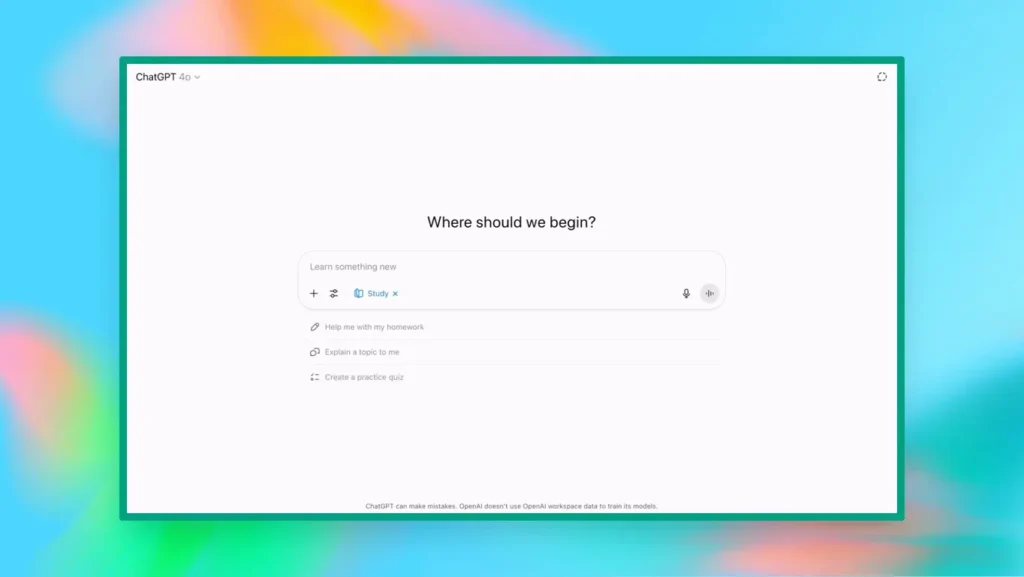
ChatGPT is honestly my go-to for customizable summaries. You can tell it exactly what kind of summary you need. Like, “give me a 200-word summary focusing on the main arguments” or “explain this like I’m a high school student.” The conversation aspect means you can keep refining until you get exactly what you need. Plus, it’s pretty great as one of the best free AI study tools if you use the free version.
Quillbot is what I recommend when students want something that feels more academic. The summaries it generates read more like professional study guides than casual explanations. It’s got this feature where you can adjust the length, which is pretty handy. I tested it for a few months and found it works really well for textbook chapters specifically.

Summarizer.org is a simple one, but sometimes that’s what you want. You paste text, hit summarize, and boom, done! No account needed, no settings to mess with. When you just need a quick overview of an article and don’t want to overthink it, this is where you can go.
When Paying Actually Makes Sense
The premium versions of these tools usually offer stuff like unlimited summaries, priority processing, and the ability to save your work in their system. If you’re a heavy user (like summarizing multiple textbook chapters every week), the paid version can be worth it just for the time saved.
Student discounts are a real thing for some of the services. You usually just need to verify with a .edu email address, and you get like 40-50% off. Of course, I couldn’t try it myself (since I’m no longer a student), but I’ve seen students pay less for tools that would normally cost more for others.
Matching Tools to Your Actual Needs
For science and technical content, you want something that preserves precision. I’ve found that Claude and ChatGPT handle scientific terminology better than some of the simpler summarizers. They’re less likely to accidentally change the meaning when they rewrite technical concepts.
Humanities and social sciences need tools that can capture arguments and interpretations, not just facts. This is where conversational AI tools shine because you can ask them to focus on thesis statements and supporting evidence rather than just listing what happened.
Language learners need something that explains things simply without a ton of idioms or complex sentence structures. Some tools have specific “simplify” modes that are perfect for ESL students. I worked with a client whose first language was Spanish, and the AI could handle summaries in both English and Spanish side-by-side.

One last thing, the integration feature with note-taking apps like Notion or OneNote is where things get really powerful. Some tools let you send summaries directly to your notes with one click. If you’re already using an AI note-taking app for your studies, finding a summarizer that plays nice with it can be really powerful.
Common Mistakes to Avoid When Using AI Summarizers
The biggest mistake I see is students reading only the summaries and thinking they’re done! Look, AI summaries are great for efficiency, but they’re not a replacement for actually understanding the content. If you never engage with the full text, you’re missing the depth and context that helps concepts actually stick in your brain.
There are definitely topics that need deeper engagement. Like, if you’re studying philosophy or literary analysis, the context matters way more than in something like memorizing biology terms. The way an author argues a point or uses specific language might get lost in summaries. You gotta read the real thing sometimes.
Since balancing efficiency with actual learning is tricky, here’s my recommendation. Use summaries for your first pass to familiarize yourself with the land. Then identify the sections that are most important or confusing, and read those in full. Finally, use summaries again for review before exams. This way you’re getting the speed benefit without sacrificing comprehension.
The Accuracy Problem
AI gets things wrong sometimes, and students don’t fact-check nearly enough. I’ve seen summaries that completely reversed the meaning of a research finding or left out a crucial limitation! It doesn’t happen constantly, but it happens enough that you can’t just blindly trust everything.
Quick verification is pretty easy though. Just scan the original text for the key facts and figures mentioned in the summary. Check that percentages, dates, and names are right. If something seems off, that’s your cue to read that section more carefully.
Here are a few red flags to watch for. Summaries that seem too good to be true, claims that sound more ideal than academic writing usually is, or missing any mention of limitations or counterarguments. Academic texts are usually pretty careful and seem protected, so if the summary isn’t, something probably got lost!
Using Summaries the Right Way
Academic integrity is real and you gotta be smart about it. Using AI to summarize for studying is totally fine. Using AI summaries to write your papers without reading the source? That’s gonna get you in trouble. Know the difference.
Some professors actually want to know if you’re using the best AI learning tools as part of your study routine. I’ve talked to teachers who think it’s great as long as you’re transparent about it. Others are more old-school and skeptical. So, feel out your professor’s view before you go all-in.
There are situations where AI summaries just aren’t appropriate. Like if you’re writing a literature review and need to cite specific passages, you need to read those passages yourself. If you’re analyzing primary sources for a history paper, the summary won’t capture what you need. Use your judgment.
Getting Better at This
Writing effective prompts is a skill you actually have to develop. I sucked at it at first! I’d write something like “summarize this” and get back garbage. Now I’m way more specific, like “summarize this chapter focusing on the causes of World War I, about 300 words, suitable for a college freshman.” See the difference?
You start to recognize what makes a good summary vs a bad one after you’ve used these tools for a while. Good summaries hit all the main points, maintain accuracy, and are clear enough that you understand the concept. Bad summaries are too vague, miss important details, or use language that’s somehow more confusing than the original.
Learning when to adjust is maybe the most important skill. If your summary is too short and missing key concepts, tell the AI to expand. If it’s too long and includes stuff that doesn’t matter for your purposes, then ask for a shorter version. You’re in charge; the AI is just a tool that does what you tell it to.
FAQ
Q: Is using an AI text summarizer considered cheating in school?
Using AI summarizers for studying and note-taking is generally acceptable, just like using study guides. But submitting AI-generated summaries as your own writing crosses the line. Always check your school’s AI policy, cite your sources properly, and use summaries as study aids, not shortcuts.
Q: Can AI summarizers handle textbooks with lots of diagrams and charts?
Most AI summarizers work best with text-only content. Some advanced tools can process PDFs with images, but they might skip visual elements. For textbooks heavy on diagrams, try taking screenshots of important visuals separately and asking AI to explain them, or combine AI text summaries with your own notes on graphics.
Q: How accurate are AI-generated summaries of research papers?
AI summarizers are pretty accurate for capturing main ideas, but they sometimes miss subtle arguments or misinterpret complex data. Always skim the original abstract and conclusion to verify accuracy. For research papers or assignments, read the full text.
Q: What’s the best free AI text summarizer for students on a budget?
ChatGPT’s free version works great for most students. It handles long texts, lets you ask follow-up questions, and adjusts summary length. Other solid free options include Quillbot (with limitations) and Summarizer.org.
Q: How long should an AI-generated summary be for effective studying?
For textbook chapters, aim for summaries around 200-300 words that cover main concepts and key details. Research papers work better with 100-150 word summaries focusing on methodology and findings. But at the end of the day, it depends on your learning style. Experiment with different lengths and see what helps you remember the material best.
Conclusion
So, to conclude, AI text summarizers are becoming essential tools for students who are dealing with information overload. But it’s important to remember, they’re not about taking shortcuts or avoiding real learning. They’re about working smarter and getting through the mountain of reading you actually need to do.
The real trick is knowing when to use them and how to use them right. Like summarizing that dense chapter so you can figure out what’s important, so you can go back and read the sections that really matter. You can also use AI to break down complicated research papers into something you can understand, then dig deeper into the stuff that connects to your work.
And I know school is hard enough without spending every waking hour reading! These tools can save you valuable time to actually understand what you’re learning, study more efficiently, and maybe even get some sleep! So, start with the free options, figure out what works for your study style, and build from there.
And remember, the goal isn’t to read less. It’s to learn more in less time. AI summarizers are just study tools, sitting right next to your highlighters, notes, and whatever helps you succeed. Use them wisely, and you’ll wonder how you ever studied without them!