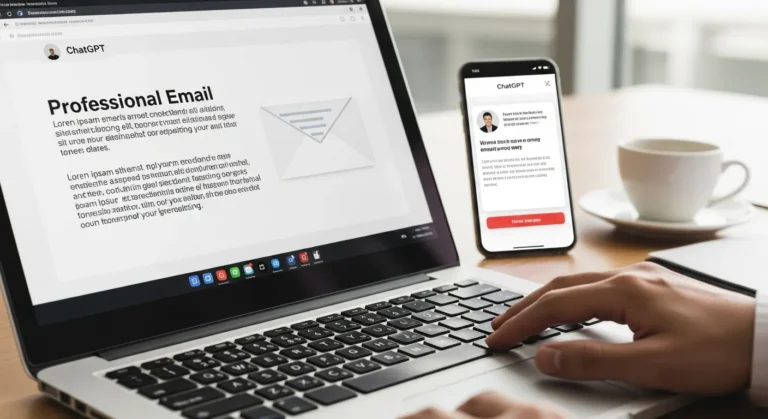
How Students Can Use ChatGPT to Study Smarter (Not Cheat)


ChatGPT for studying can help students learn faster and understand complex topics better when used as a tutoring tool rather than a shortcut. Students can turn AI into a study partner that explains concepts, creates practice questions, and breaks down difficult material into digestible pieces.
Introduction
Here’s something obvious about ChatGPT. Students are already using it. Like, a lot!
Recent data from the Pew Research Center shows the usage of ChatGPT for schoolwork doubled from 13% in 2023 to 26% in 2024. But the thing is, most schools are freaking out about AI, while students are quietly figuring out how to use it anyway!
So let’s be honest for a second. I’ve worked with tons of people, whether they’re just students or small business owners who wanted to learn how to use AI tools the right way. And the truth is, ChatGPT for studying isn’t about cheating. Actually, when you use it correctly, it’s more like having a personal tutor available 24/7.
The problem begins when nobody’s really showing students how to use ChatGPT without crossing ethical lines. This guide will show you the smart, legitimate ways to use AI as a study tool that actually helps you learn better, not just do things faster. Plus, you’ll know exactly where to draw the line so you stay on the right side of academic integrity. Let’s do this!
Why ChatGPT Is Actually Pretty Good at Helping You Learn
Look, I get it. When ChatGPT first blew up, everyone panicked about students using it to cheat. Teachers were freaking out, parents were worried, and to be honest I had a mini panic too!
But here’s the other side of the coin. After watching my family using it (and helping a few clients figure out how to use AI for studying with their teens), I realized something pretty important. ChatGPT isn’t really that different from having a tutor available 24/7. The key is to use it correctly (which is the whole purpose of this guide!).
The big difference between AI tutoring and old-school studying is the idea of active learning vs just copying stuff down. When I was in school (and it was a long, long time ago), I’d highlight textbooks until they looked like a rainbow and somehow convince myself I was learning. Spoiler, I wasn’t! Real learning happens when you’re actually wrestling with the material, asking questions, and trying to explain things in your own words.

ChatGPT is actually pretty good for this because you can have a real conversation with it. You ask a question, it answers, you ask a follow-up, it explains it differently. It’s patient. It never rolls its eyes when you ask the same thing for the third time! Trust me, I’ve worked with enough overwhelmed business owners to know that sometimes you just need someone (or something) to explain a concept five different ways before it clicks.
The students who really get the most out of it are not using ChatGPT to do their homework for them! They’re using it like a study partner. They’ll read their textbook, get confused about something, then ask ChatGPT to break it down. Or they’ll try to solve a problem, get stuck halfway through, and use it to figure out where their thinking went wrong.
Here’s what I’ve noticed (and this is from watching others and talking to teachers I know), ChatGPT can adapt to however your brain works. For example, do you need a sports analogy to understand a history concept? It’ll do that. Want it explained like a story? Sure. Prefer a step-by-step breakdown with examples? Done. That flexibility is honestly what makes it so useful for learning.
The Smart Ways to Use ChatGPT for Studying (That Won’t Get You in Trouble)
Alright, so let’s talk about the practical ways you can use ChatGPT without crossing the line!
Breaking down complex concepts is probably the number one thing I love. When you’re staring at a textbook paragraph that might as well be written in another language, you can literally copy it into ChatGPT and say, “Explain this like I’m twelve.” I’ve used this trick myself when reading dense business articles, and it works great. Try something like, “Explain photosynthesis using a restaurant analogy” or “What’s the main point of this paragraph in simple words”. If you didn’t try it before, you’ll be amazed at how good this is.
Creating practice questions is another big one. Instead of just re-reading your notes (which, let’s be real, doesn’t help much), you can paste a chapter summary and ask ChatGPT to make 10 quiz questions about it. Then you actually test yourself. This is probably the best way to evaluate yourself if you wanna improve your grades or just learn something.
Now, here’s where it gets tricky but useful. Getting unstuck on homework. This is different from copying answers. If you’re working through a math problem and you can’t figure out step three, you can ask ChatGPT to explain that specific step. The prompt might be, “I’m trying to solve this equation, and I got to this point, but I don’t understand what to do next. Can you explain the process, not just give me the answer?” See the difference?

I’ve got a client who helps her kids with ChatGPT as an AI text summarizer for students, and honestly, she’s been really happy with this technique. When you’ve got a forty-page reading assignment with little time, you can simply ask for key points. But (and this is important) you still need to read the actual text. Use the summary to know what to focus on, not as a replacement. That’s the line between smart studying and lazy cutting corners.
Learning by teaching is this cool technique where you explain a concept to ChatGPT like you’re the teacher, then ask it to point out anything you got wrong or missed. I do this sometimes with business concepts. You’d be surprised how much you learn when you have to put something in your own words. Try, “I’m going to explain supply and demand to you. Tell me if I miss anything important.”
One thing that’s actually pretty helpful but nobody talks about? Using it as an AI study planner. You can tell ChatGPT what you need to study, when your tests are, and ask it to make a schedule. It’ll break everything into realistic chunks. Sure, you could do this yourself, but sometimes you just need someone (or something) to organize the chaos for you!
Last point, for vocabulary building, ChatGPT is honestly better than flashcards sometimes. You can ask for definitions, example sentences, memory tricks, and more. Plus, you can ask it to use the word in different contexts until it actually sticks in your brain.
Where to Draw the Line: What Crosses Into Cheating Territory
Okay, real talk. This is where things get messy, and honestly, I think a lot of students (and parents) are confused about where exactly the line is.
Academic integrity in the AI age basically means; Did you do the thinking? Or did you learn something? If you’re just copying and pasting AI-generated stuff and calling it yours, that’s still cheating. The tool changed, but the principle didn’t. AI ethics in education is still an evolving conversation, and schools are still figuring it out, but the core idea stays the same. You need to do your own work!
Here are some super clear examples of what crosses the line. Submitting an essay that ChatGPT wrote? Cheating. Using it during a closed-book test? Definitely cheating. Asking it to solve your entire math homework and just copying the answers? Also cheating. Having it write your college admissions essay? Not only cheating, but also a terrible idea because it’ll sound generic and fake!
The reason copying hurts you isn’t just about grades or getting caught. It’s that you’re literally robbing yourself of learning. I’ve seen this with business owners who try to shortcut learning basic skills. They end up stuck later because they never built the foundation. Same thing with school. If you use AI to skip the hard work of understanding something, you’ll be lost when the next lesson builds on it.
Every school’s AI policy is different right now. Some are totally against it, some are fine with it for certain things, some haven’t even figured out their rules yet! You need to actually check your school’s policy. Go look at your syllabus, ask your teacher, or check the student handbook. Don’t assume.
The difference between “help with understanding” and “doing the work for you” is pretty simple when you think about it. Help is, “Explain this concept to me,” or “What’s wrong with my approach here?” Doing the work is, “Write this for me,” or “Give me the answers”! If you’re learning something in the process, you’re probably okay. If you’re just getting output, you’re probably cheating.
There are situations where you absolutely should not use AI. During tests, obviously is the biggest one. Or when your teacher specifically said no AI. Or when the whole point of the assignment is to develop your own voice or thinking (like a personal essay or a creative writing piece). Or when you’re supposed to be demonstrating that YOU can do something specific.
Here’s my advice. Be transparent. If you used ChatGPT to understand a concept and your teacher asks, just say so. Most reasonable teachers are fine with AI as a learning tool. They’re not fine with it as a replacement for thinking. The more honest you are about how you’re using it, the less likely you’ll accidentally cross a line.
Practical Prompts and Tricks That Actually Work for Students
Alright, let’s get into the actual prompts that work. I’ve tested these myself, and I’ve seen students use them successfully.
For math, try something like this, “I’m working on THESE equations. Give me 5 practice problems at a medium difficulty level, then let me solve them and check my work.” Or if you’re stuck, then try, “I got to this step in solving this equation YOUR_WORK, but I’m not sure what to do next. Can you explain the next step without solving it for me?”
Science is great for the “explain like I’m five” approach! Literally type, “Explain SOMETHING like I’m five years old.” If that’s too simple, follow up with, “Okay, now explain it at a high school level with the actual terminology.” This builds your understanding in layers, which honestly is how learning actually works.
For humanities subjects, I love using the Socratic method. Instead of asking ChatGPT to explain something, try, “Quiz me on the causes of SOMETHING. Ask me questions and tell me if my answers are right or need more detail.” This is when you’re doing the work; ChatGPT is just checking.
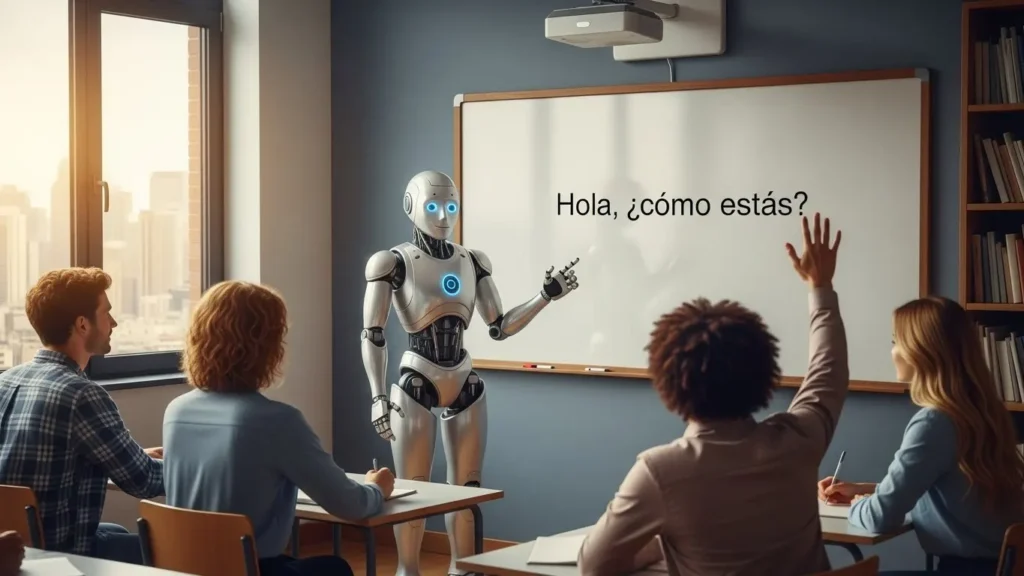
Language learning is another area where ChatGPT really shines. You can say: “I’m learning Spanish. Give me 10 sentences in English to translate, starting easy and getting harder.” Then check your work. Or, “Explain the difference between THIS and THAT using examples I’d actually use in conversation.”
Here’s something important that not enough people talk about. ChatGPT makes mistakes. It sounds confident even when it’s wrong. So you need to fact-check, especially for anything science or history related. A good trick is to ask, “Can you provide sources for this information?” If it can’t, or if something seems off, double-check with your textbook or a reliable website.
For creating study materials, try something like, “Create a one-page outline of the main points from this chapter” or “Make a practice test with 15 multiple choice questions on this topic.” I’ve used variations of these as an AI essay feedback tool approach. Just paste in your draft and ask, “What are the weak points in this argument?” or “Is this thesis statement clear?”
The difference between vague and specific prompts is huge. Here’s an example:
- Vague: Help me with history!
- Specific: Explain the economic factors that led to the French Revolution, focusing on taxation and food shortages.
The specific one will get you way better information. Context matters. The more you tell ChatGPT about what you need and why, the better it can help.
Another trick I’ve picked up is follow-up questions. Don’t just take the first answer. Ask, “Can you give me an example?” or “What’s a common mistake people make with this?” or “How would I explain this to someone who knows nothing about it?” Going deeper is where real understanding happens, so don’t be afraid to use it for your advantage.
And here’s my last point in this section. When looking at the best AI learning tools out there, ChatGPT is free and pretty solid, but it’s not perfect. It’s good for explanations and practice, but it can’t replace reading your actual textbook or doing hands-on work. Use it as one tool in your kit, not the only one.
Building Better Study Habits with AI as Your Sidekick
So here’s where we talk about actually making this work long-term without becoming that person who can’t think without AI holding their hand!
The key is integration, not replacement. ChatGPT should fit into your study routine the same way you’d use a calculator for math; it helps with specific tasks, but it doesn’t do all the thinking for you. I still use pen and paper to sketch out ideas for my business, even though I could just type everything. There’s something about writing by hand that makes your brain process differently.
The concept of “AI-assisted learning” vs “AI-dependent learning” is something I think about a lot. Assisted means you use AI to understand things better, to practice more efficiently, to fill in gaps. But dependent is the opposite, which means you can’t function without it! If you find yourself reaching for ChatGPT for every single little thing, that’s a red flag!
You should still take notes by hand sometimes. I know, I know, typing is faster. But studies show (and honestly, my own experience backs this up) that writing by hand helps you remember better. When you’re in lecture or reading your textbook, write notes the old-fashioned way. Then you can use ChatGPT to clarify stuff later.
Balancing AI help with traditional study methods is honestly pretty simple. Try the traditional way first. Read the chapter. Attempt the problems. Go to your teacher’s office hours. Then use AI to fill in the gaps or reinforce what you’re learning. Don’t start with AI and skip everything else.

The real danger is laziness. It’s so easy to just paste your homework into ChatGPT and call it done! But you’re only hurting yourself. I’ve made this mistake in business (tried to shortcut learning something important, and it came back to bite me later). You can’t fake understanding forever!
Here’s how to tell if ChatGPT is actually helping you learn. Test yourself without it. Can you explain the concept to someone else? Can you solve problems on your own? Did your grades improve? If the answer is yes, great. If you’re getting worse or you’re more confused, you’re probably using it wrong!
The goal isn’t to be the fastest student or to have the easiest time. The goal is to actually learn things that stick with you. ChatGPT can help with that, but only if you’re using it to support real learning, not replace it.
One last thing (and this is something I wish someone had told me years ago), developing critical thinking skills is way more important than memorizing facts. ChatGPT can help you develop those skills if you use it right. Ask it to challenge your assumptions. Have it play devil’s advocate! Make it explain why something matters, not just what it is. That’s the kind of thinking that’ll actually help you in life, not just on tests.
At the end of the day, ChatGPT is just a tool. A really powerful, really useful tool, but still just a tool. How you use it determines whether it makes you smarter or just makes you better at looking busy!
FAQ
Q: Is using ChatGPT for studying considered cheating?
A: It depends on how you use it. Using ChatGPT to understand concepts, create study materials, or generate practice questions is fine. Submitting AI-generated work as your own or using it during exams violates academic integrity policies.
Q: Can teachers tell if I used ChatGPT on my homework?
A: Teachers increasingly use AI detection tools and can spot patterns in AI-written work. More importantly, if you don’t understand the material when questioned, it becomes obvious you didn’t do the work yourself!
Q: What’s the best way to ask ChatGPT study questions?
A: Be specific about what you need. Instead of “explain photosynthesis,” try “explain photosynthesis using a simple analogy I can remember for my biology test.” The more context you give, the better help you’ll get.
Q: Will using ChatGPT make me worse at learning?
A: Only if you use it as a shortcut instead of a tool. Students who use ChatGPT to deepen their understanding typically learn better. Those who use it to avoid thinking learn less than they would otherwise.
Q: Should I tell my teacher I’m using ChatGPT to study?
A: Check your school’s AI policy first. If it’s allowed for studying, being transparent shows integrity. Many teachers appreciate students who use AI responsibly and are honest about their process.
Conclusion
Look, ChatGPT isn’t going anywhere. Students worldwide are using it, and that number’s only going up. But the difference between students who grow with AI and those who crash and burn comes down to one thing; how they use it.
The students who succeed treat ChatGPT like a study buddy who helps them understand stuff better, not a magic answer machine. They ask it to explain things differently when they’re confused. They use it to create practice problems. They lean on it when they’re stuck at 11 PM and can’t figure out a concept.
What they don’t do is copy-paste their way through assignments or pretend AI-written work is their own. Because honestly, that doesn’t help you learn anything. And when exam day comes around, you’re toast!
So here’s my last advice. Experiment with ChatGPT for studying, but stay curious and honest. Use it to learn smarter, not to avoid learning altogether. Your future self (the one taking finals or applying for jobs) will thank you for building real knowledge instead of just cheating the system! And hey, if you figure out some tricks that work really well for you, share them here with other readers. Learning’s better when we help each other out.